Category: Scent Guides

  • Choosing an Inspired Perfume: Turn a Designer Reference into a Personal Brief

    Choosing an Inspired Perfume: Turn a Designer Reference into a Personal Brief

    Choosing an inspired perfume starts with a clear buying brief. Identify the exact product, choose your priorities and keep formula and performance expectations honest.

    You know the name of a perfume you enjoy. A shop offers an inspired alternative, and the familiar reference makes the decision feel nearly finished. Before choosing the actual product, take one more step. Decide what you want from this purchase.

    That step is not a demand for an elaborate scent vocabulary. A short brief can be enough. It separates the reference that started your search from the independent product you are considering, then identifies the qualities that matter in your own routine.

    FragranceLab publishes this journal and operates the linked inspired-fragrance store. Designer examples below identify original brand products; they are not claims that our independent alternatives share their formulas, test results or official brand affiliation. This guide reports no editor wear test or customer case study.

    Start with the exact reference, then set it aside

    Record the full name of the original fragrance and the version you mean. Include the format when you know it. A family name can point to several interpretations, so a remembered word or a recognizable bottle shape may leave an important question unanswered.

    Prada Beauty’s current US Paradoxe page makes the distinction visible. Alongside the original Eau de Parfum, its comparison section lists Sweet Chemistry Eau de Parfum and Radical Essence Parfum. The brand describes the original through a floral-ambery direction, Sweet Chemistry through a floral-fruity direction and Radical Essence through a floral-gourmand-woody direction. These official catalog descriptions were checked on October 22, 2026. They are not independent assessments. Nor do they announce that all three launched this week.

    The practical point is precision. A reference to Paradoxe alone may not identify the interpretation you have in mind. Nor does an inspired listing with a related reference automatically represent every version in that family. Resolve that ambiguity before comparing an offer.

    Once the reference is clear, let it do its limited job: it gives the search a starting direction. The next steps concern the actual product and what you want from it.

    Separate product identity from scent direction

    Keep two columns in your notes. One describes what the product is. The other describes the scent direction you want to investigate. A product can belong in the second column’s shortlist without being the same object as the original in the first.

    Question Useful information What it does not establish
    What is being sold? Exact independent product name, seller, format and size Designer-brand manufacture or authorization
    Why did it enter the shortlist? The stated reference or descriptive direction An identical composition
    What can I check before ordering? Actual product details, ingredient information where available and written terms An editor’s personal wear result
    What remains personal? Whether you enjoy the finished fragrance in your routine A result guaranteed by a familiar name

    This is especially helpful when several shops use similar descriptive language. Compare the information each provides about its own product. Do not fill a gap in one listing with information taken from the designer’s website.

    An ingredient list also has limits. The FDA explains that fragrance components in US cosmetics may be declared collectively as fragrance. A public declaration is therefore not necessarily a complete aromatic formula. A shared note word or ingredient term is not enough to prove a matching composition.
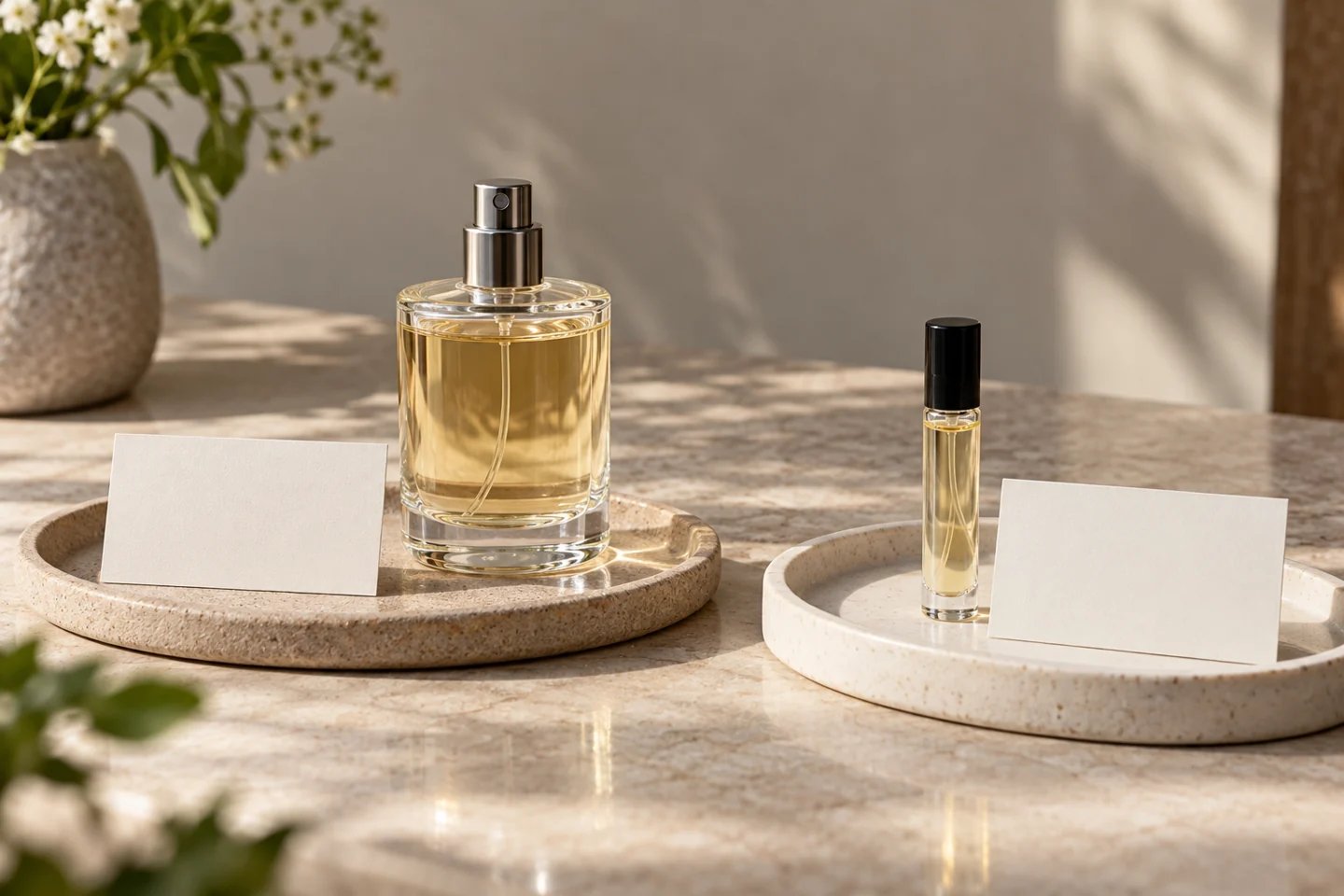
    Different generic fragrance containers on separate trays with blank identity cards
    Editorial illustration generated with AI; generic objects, not actual FragranceLab products, designer bottles or test evidence.

    Write two priorities and one acceptable difference

    Make the brief smaller than the marketing description. Choose two qualities you actually want to investigate, then identify one difference you could accept. The aim is a decision you can use, not a list that sounds sophisticated.

    Here is an invented preference brief, not an account of anyone’s experience: “I want a floral direction with a soft woody finish. I would like it for ordinary afternoons. I can accept a different opening, but I do not want to buy solely on a promise of maximum strength.”

    Notice what this leaves open. It does not assign ingredients, hours of wear or a similarity percentage. Those would need their own evidence. It also does not insist that every aspect of the original be reproduced before an independent fragrance can be enjoyable.

    Someone else’s brief could reasonably be different. They may care most about an opening impression, a particular format or a scent they already know how to use. The useful brief is the one that explains your choice, rather than borrowing another person’s certainty.

    Decide which uncertainties matter before paying

    There are two kinds of missing information to resolve. Product questions belong with the seller: the exact item, size, format, current availability and applicable order terms. Preference questions concern whether the finished fragrance suits you. An answer to one type does not settle the other.

    If the listing leaves a product detail unclear, ask about that specific detail. “Which item and format would arrive?” is more useful than “Is this the best version?” Keep the answer associated with the correct product instead of treating it as a statement about every fragrance in a range.

    If an opportunity to try the actual product exists, use it without assuming that every seller offers samples. If it does not, acknowledge the preference uncertainty in your purchase decision. A long description cannot remove that uncertainty merely by adding more adjectives.

    Check the actual shipping and return information before ordering, including any conditions relevant to opened fragrance. This article creates no new promise about delivery, refunds, samples or exchanges. If a term matters to the decision and remains unclear, resolve it before payment.
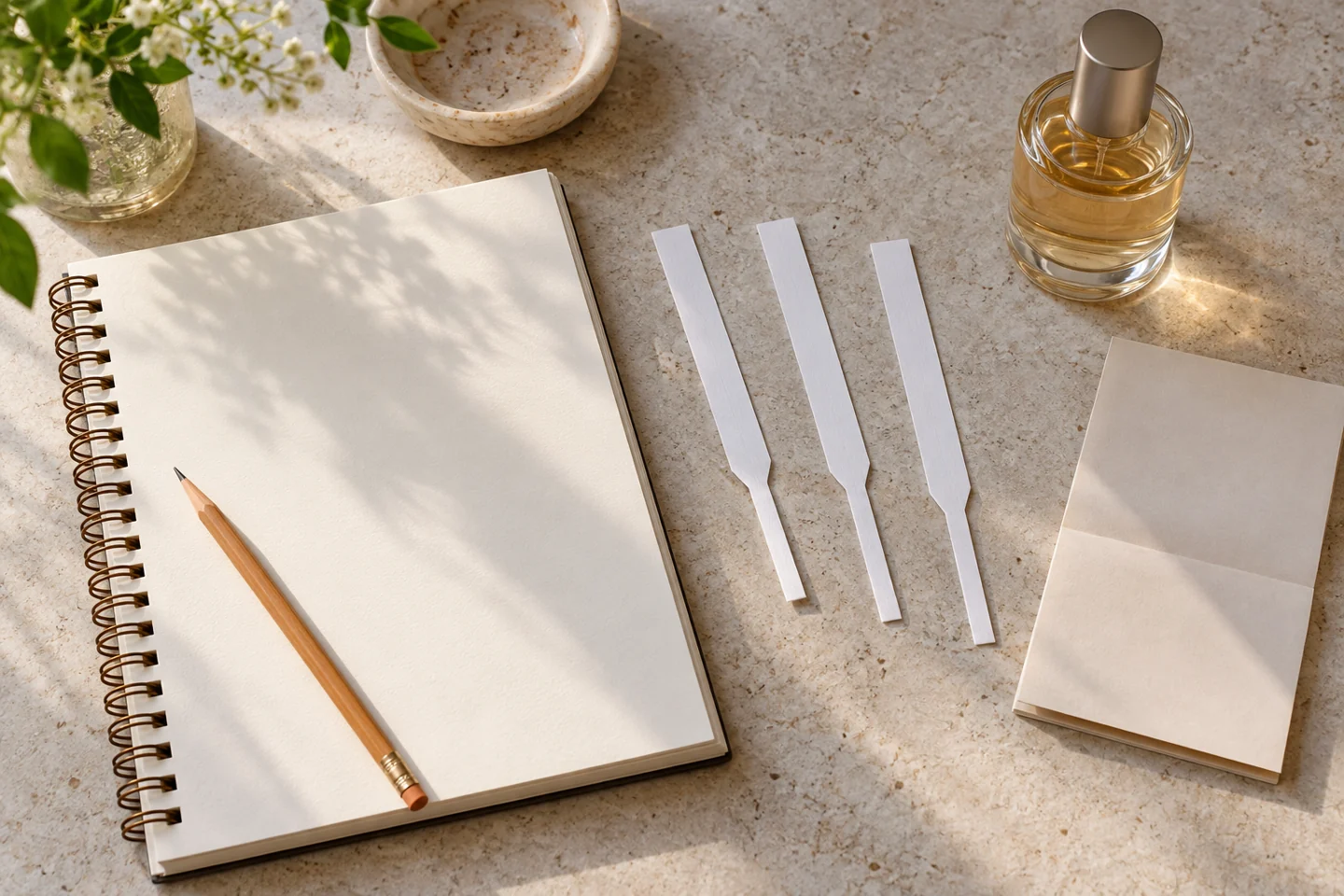
    Blank preference notebook and spaced scent strips beside a closed generic bottle
    Editorial illustration generated with AI; generic objects, not actual FragranceLab products, designer bottles or test evidence.

    Judge the finished purchase on its own terms

    When you have the product, keep its identity attached to your observations. Follow its own directions. An independent inspired fragrance should not inherit the designer’s application instructions, ingredient claims or reported performance simply because the reference is familiar.

    A brief record can answer three questions: what product did I use, in what ordinary setting, and what would I choose differently next time? Write a preference in plain language. “I would choose something less sweet for this setting” is more useful than a precise-looking score you cannot explain.

    Avoid turning a first impression into an assertion about every bottle or every wearer. Equally, there is no need to force a favorable verdict because the description sounded right. The brief is a tool for learning what you want, not a contract to like the purchase.

    Choosing an inspired perfume: your next step

    Before ordering, you should be able to name the exact item, explain the scent direction that interests you and identify what remains uncertain. That is a stronger starting point than choosing by a designer reference alone.

    If you want to explore the independent products currently listed by our store, browse the FragranceLab collection and read the individual product details. The Prada examples in this article do not imply that those official products or every discussed interpretation are available here. Our catalog and its current information determine what can actually be ordered.

    A good brief leaves room for an enjoyable alternative while keeping expectations honest. You are choosing a finished product for your own use, with a clear identity and a purpose you can explain.

    Sources and editorial notes

    Published by FragranceLab, which operates the linked store and related journals. The preference brief is invented for illustration. No personal trial, community rating, brand formula or customer feedback is claimed. The three conceptual illustrations were generated with AI and show generic objects, not actual FragranceLab products or designer bottles. No Fragrantica text or images were used. Sources checked October 22, 2026; no independent comparative wear testing is reported.
  • How to Choose the Right Fragrance for Everyday Life

    How to Choose the Right Fragrance for Everyday Life

    Learn how to choose the right perfume for your daily life. Compare fragrance families, routines, weather and your own preferences.

    Choosing a fragrance can feel more complicated than it needs to be. A product description may list a dozen notes. Meanwhile, social media may crown a new favorite every week. Two people can also disagree completely about the same bottle. None of that means you need expert knowledge to choose well.

    A better starting point is your real life: where you plan to wear a fragrance, what kinds of smells you enjoy, and how much presence you want the scent to have. Once you have those answers, fragrance families and testing methods become useful tools rather than another source of pressure.

    This guide offers a calm, practical way to narrow your options—whether you are choosing your first bottle, replacing an everyday favorite, or buying a gift.

    1. Start with the moment, not the brand name

    Picture a normal week. You might spend one day at an office, another running errands, and an evening with friends. You might want one fragrance that works comfortably for all three, or you may enjoy changing scents with the occasion.

    Ask yourself:

    • Where will I wear it most? A close shared workspace may call for a more restrained application than a casual outdoor setting.
    • What do I want it to feel like? Bright and energetic, soft and comforting, fresh and understated, or warmer and more expressive?
    • How often will I use it? A daily favorite and a special-occasion bottle serve different purposes.
    • What have I enjoyed before? Think of perfumes, body-care products, flowers, foods, or natural surroundings whose smells you like.

    These questions form a better shortlist than a trend ranking alone. A fragrance that is famous for being dramatic may not be the one you enjoy wearing to work every morning.

    2. Learn four broad fragrance directions

    Fragrance families are a shared vocabulary, not a strict filing system. A single perfume may move across several descriptions, and note lists do not reveal the complete formula. Still, four broad directions can help you begin.

    Fresh and citrus-led

    Think of sparkling citrus, green leaves, herbs, and airy impressions. Fresh scents can feel bright and easygoing, although not every fresh perfume is light or short-lived. Citrus-led openings also change as the rest of the fragrance develops.

    Floral

    Floral compositions range from light and transparent to rich and velvety. Rose, jasmine, orange blossom, and other flower-inspired accords may be interpreted in many ways. “Floral” does not automatically mean sweet or traditionally feminine.

    Woody and aromatic

    Sandalwood-inspired smoothness, cedar-like dryness, vetiver, herbs, and aromatic notes can create restrained or distinctive scents. This direction often appeals to people who enjoy texture and structure rather than obvious sweetness.

    Warm, sweet and amber-like

    Vanilla, resins, soft spices, and gourmand-style accords can feel cozy or expressive. The same note can take on different characteristics depending on its partners: vanilla might seem airy, creamy, smoky, or woody.

    Try this exercise: choose one scent from two different directions and smell them separately. Describe the overall feeling without looking at their note lists. Your own vocabulary is more useful than repeating marketing phrases.

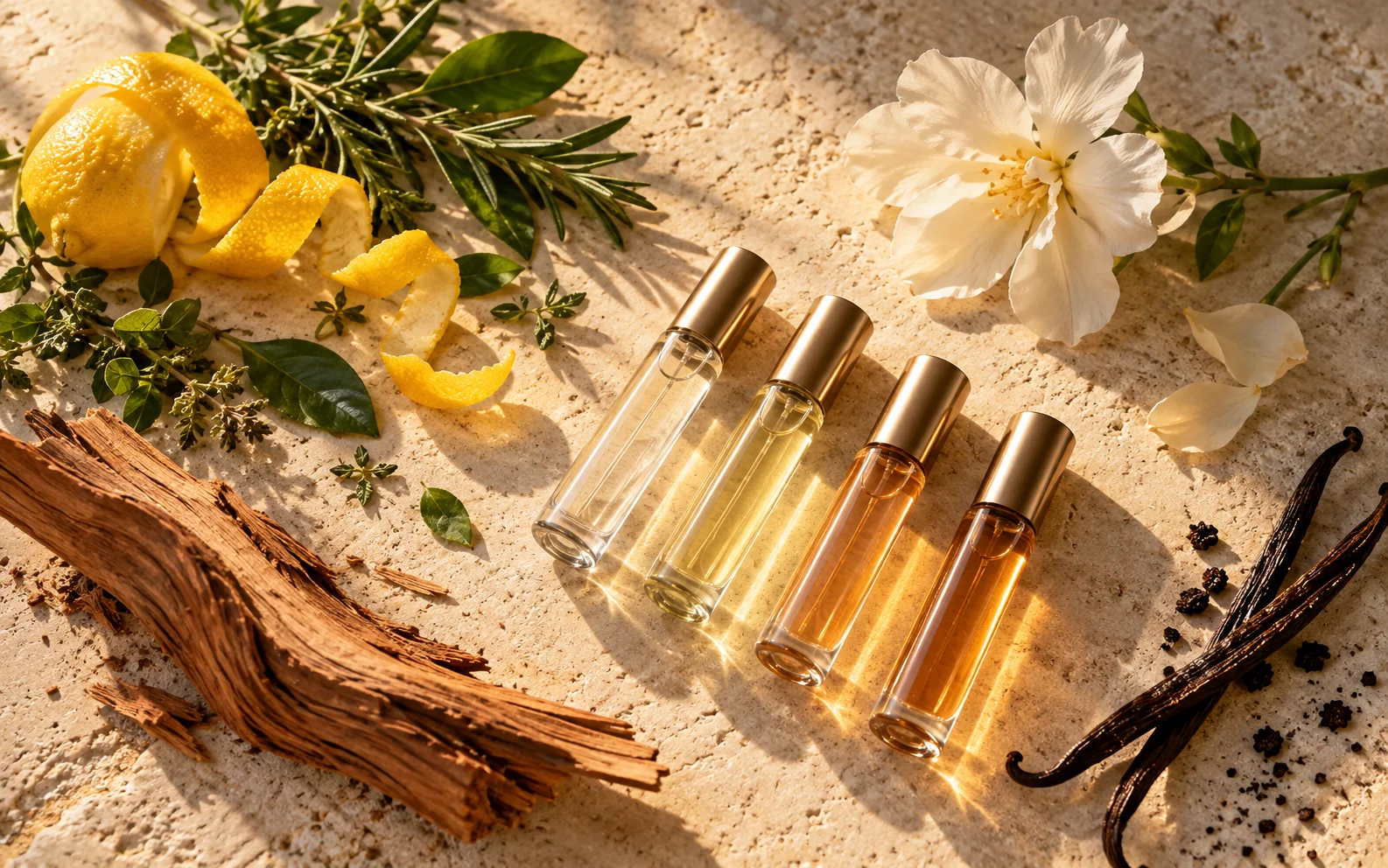
    Four botanical groupings representing fresh, floral, woody and warm fragrance directions.
    Editorial illustration generated with AI; generic bottles and objects, not actual FragranceLab products or measured results.

    3. Do not choose by notes alone

    A perfume described with bergamot, rose, and musk will not necessarily smell like a literal mix of three raw ingredients. Notes are often interpretive descriptors, and the way materials interact matters enormously.

    Think of notes as hints about the character of a fragrance. They can tell you where to begin, but they do not guarantee the final effect. Two perfumes featuring “rose” may have very little in common once you smell them.

    When browsing online, pay attention to the complete product description, especially words that explain balance and mood. Is the scent intended to feel crisp, creamy, powdery, dry, sparkling, or softly warm? Compare several descriptions and be careful with overly broad claims such as “perfect for everyone.”

    A clear product listing should also explain the actual bottle size, product identity, shipping terms, and whether it is an original branded product or an independent inspired alternative. These details matter as much as the note pyramid.

    4. Sample slowly: paper first, skin if appropriate

    A scent strip is an excellent tool for comparing openings without wearing several fragrances at once. Spray a small amount, label the strip, and give it a moment to settle. Smell it again after some time instead of making a decision from the first seconds.

    If a fragrance passes this first test, consider trying it on skin when suitable for you. Paper and skin are different surfaces, and the perceived development may vary. Apply an amount consistent with the product guidance. Avoid testing too many fragrances at once, since repeated exposure can make comparisons harder.

    Keep short notes at three moments: your first impression, the way the scent feels later, and whether you still enjoy it in the setting where you would wear it. These do not need to be elaborate. “Fresh opening, smoother after an hour, comfortable for daytime” is already useful.

    If you have sensitivities, review ingredients and safety information. Stop using a product if it causes irritation and follow relevant medical advice when needed. A popular fragrance is not automatically right for every person.

    5. Understand projection, longevity and comfort

    Shoppers often use “strong” to describe several different qualities. Projection is how noticeable a fragrance may be beyond the immediate application area. Longevity is how long its scent remains detectable. A fragrance can last close to the skin without filling the room; another may project strongly early and become softer later.

    Neither trait is automatically better. A subtle scent can be excellent for shared spaces. A more noticeable fragrance may fit a different context. More sprays do not necessarily improve the experience, especially when other people are close by.

    Be skeptical of universal wear-time guarantees. Composition, dose, surroundings, individual perception, and other variables affect what people notice. Your own test over a normal day will usually be more informative than a promise measured in exact hours.

    The IFRA concentration FAQ explains that EDT and EDP are common industry descriptors rather than strict international concentration definitions. A label therefore cannot promise a particular number of hours.

    6. Let season and setting guide you—without turning them into rules

    Warm weather can make some fragrances feel more noticeable, and heated indoor spaces can change the experience of a winter scent. Many people enjoy citrus or green styles in warmer months and woods or warm accords in cooler weather, but these are preferences, not laws of fragrance.

    Focus on the environment. A fragrance for a long meal indoors may benefit from lighter application. A scent worn during an outdoor walk may be experienced differently. If you travel, consider portability, secure packaging, and any applicable transport restrictions rather than choosing by season alone.

    The best option is the one that feels comfortable under your real conditions—not the one assigned to a month by a trend list.

    For ingredient questions, distinguish a perfume’s note description from its ingredient label. FDA guidance on fragrance explains that fragrance ingredients can sometimes be grouped under “fragrance,” and some people are sensitive to particular ingredients. Ask the manufacturer about a specific concern.

    An everyday fragrance beside clothing and personal items, suggesting a thoughtful morning routine.
    Editorial illustration generated with AI; generic bottles and objects, not actual FragranceLab products or measured results.

    7. Choose a bottle size that matches your uncertainty

    A large bottle can look economical when measured by price per milliliter, but only if you will actually use it. For an unfamiliar scent, the best value may be a smaller size or a legitimate sample opportunity that reduces the risk of regret.

    Ask how frequently you expect to wear it. If you use the same scent almost every day, a larger bottle might make sense. If you like variety, smaller formats may keep the collection manageable.

    Check the stated volume rather than relying on the bottle’s appearance in photographs. Compare total costs, not just apparent discounts. A well-chosen bottle that you finish offers more practical value than a bigger bottle that stays untouched.

    8. A simple method for choosing a fragrance gift

    Buying for someone else introduces uncertainty. The safest approach is not to guess their personality from age or gender; it is to look for actual clues.

    Start with fragrances they already use and enjoy. Look at broad scent directions, preferred intensity, and when they typically wear fragrance. If you cannot learn that much, avoid assuming that an expensive or famous bottle will automatically be welcome.

    Check the store’s gift options and return conditions. Fragrance preferences are highly personal, and returns may have restrictions after opening. A thoughtful note, accurate product information, and a reliable exchange policy can matter more than dramatic packaging.

    A gift should feel considered, not like a test of the recipient’s taste.

    9. Know what an “inspired” fragrance means when shopping

    Online fragrance stores may sell different kinds of products. Some are original designer perfumes. Others are independently made fragrances intended to evoke a familiar scent direction. Those categories should not be confused.

    FragranceLab describes its collection as independent inspired alternatives, not original designer-brand perfumes. If you are considering one, judge its own description, price, bottle information and your personal experience. Do not assume its formula, packaging, performance or manufacturer matches another brand’s product.

    Before ordering, check the product page, shipping policy, payment process, and available support. The confidence to buy should come from clear information rather than ambiguity about what arrives.

    10. How to choose the right perfume: five questions

    When you have narrowed a shortlist, ask yourself:

    1. Do I genuinely enjoy the scent after the opening settles?
    2. Can I picture wearing it in a normal week?
    3. Is the level of presence comfortable for the people and spaces around me?
    4. Am I confident about the product identity, size, price, and policies?
    5. Would I still want this bottle if it were not trending?

    You do not need perfect answers. The point is to replace impulse with a little reflection.

    If two options feel equally good, consider buying neither immediately. Revisit them after a day or two. Deliberate purchases often lead to more satisfying collections.

    Frequently asked questions

    Is a more expensive fragrance always better?

    No. Price can reflect branding, presentation, distribution, ingredients, and other factors. Enjoyment and fitness for your purpose are personal. Evaluate what you are buying and whether the value makes sense to you.

    Should I choose EDP instead of EDT?

    Not automatically. Eau de Parfum and Eau de Toilette labels often indicate differences in a brand’s formulation approach, but they do not guarantee a specific performance or preferred scent character. Compare the actual versions whenever possible.

    Can I buy a fragrance without trying it first?

    Yes, but uncertainty is higher. Read accurate descriptions, check size and return rules, and consider smaller purchases or samples where available.

    How many fragrances do I need?

    As many or as few as serve your life. One reliable favorite is enough for many people. A small, varied wardrobe can be enjoyable if you like choosing different scents for different moments.

    Make fragrance a personal choice

    The right fragrance is not necessarily the most expensive, the most complimented, or the longest-lasting. It is the one you enjoy wearing, understand well enough to buy confidently, and can fit into your own life.

    Start with a mood, explore a few scent directions, sample patiently, and consider the practical details. Fragrance becomes easier to enjoy when the decision feels like your own.

    Explore FragranceLab: Browse the FragranceLab collection for independent inspired fragrance styles, with product identity and ordering information explained on individual listings.

    Sources and editorial notes

    Reviewed on October 15, 2026. These are editorial guides, not personal wear tests, supplier certifications or product performance guarantees. Images are AI-generated conceptual illustrations, not photographs of products offered for sale.