Choosing an inspired perfume starts with a clear buying brief. Identify the exact product, choose your priorities and keep formula and performance expectations honest.
You know the name of a perfume you enjoy. A shop offers an inspired alternative, and the familiar reference makes the decision feel nearly finished. Before choosing the actual product, take one more step. Decide what you want from this purchase.
That step is not a demand for an elaborate scent vocabulary. A short brief can be enough. It separates the reference that started your search from the independent product you are considering, then identifies the qualities that matter in your own routine.
FragranceLab publishes this journal and operates the linked inspired-fragrance store. Designer examples below identify original brand products; they are not claims that our independent alternatives share their formulas, test results or official brand affiliation. This guide reports no editor wear test or customer case study.
Start with the exact reference, then set it aside
Record the full name of the original fragrance and the version you mean. Include the format when you know it. A family name can point to several interpretations, so a remembered word or a recognizable bottle shape may leave an important question unanswered.
Prada Beauty’s current US Paradoxe page makes the distinction visible. Alongside the original Eau de Parfum, its comparison section lists Sweet Chemistry Eau de Parfum and Radical Essence Parfum. The brand describes the original through a floral-ambery direction, Sweet Chemistry through a floral-fruity direction and Radical Essence through a floral-gourmand-woody direction. These official catalog descriptions were checked on October 22, 2026. They are not independent assessments. Nor do they announce that all three launched this week.
The practical point is precision. A reference to Paradoxe alone may not identify the interpretation you have in mind. Nor does an inspired listing with a related reference automatically represent every version in that family. Resolve that ambiguity before comparing an offer.
Once the reference is clear, let it do its limited job: it gives the search a starting direction. The next steps concern the actual product and what you want from it.
Separate product identity from scent direction
Keep two columns in your notes. One describes what the product is. The other describes the scent direction you want to investigate. A product can belong in the second column’s shortlist without being the same object as the original in the first.
| Question | Useful information | What it does not establish |
|---|---|---|
| What is being sold? | Exact independent product name, seller, format and size | Designer-brand manufacture or authorization |
| Why did it enter the shortlist? | The stated reference or descriptive direction | An identical composition |
| What can I check before ordering? | Actual product details, ingredient information where available and written terms | An editor’s personal wear result |
| What remains personal? | Whether you enjoy the finished fragrance in your routine | A result guaranteed by a familiar name |
This is especially helpful when several shops use similar descriptive language. Compare the information each provides about its own product. Do not fill a gap in one listing with information taken from the designer’s website.
An ingredient list also has limits. The FDA explains that fragrance components in US cosmetics may be declared collectively as fragrance. A public declaration is therefore not necessarily a complete aromatic formula. A shared note word or ingredient term is not enough to prove a matching composition.
Write two priorities and one acceptable difference
Make the brief smaller than the marketing description. Choose two qualities you actually want to investigate, then identify one difference you could accept. The aim is a decision you can use, not a list that sounds sophisticated.
Here is an invented preference brief, not an account of anyone’s experience: “I want a floral direction with a soft woody finish. I would like it for ordinary afternoons. I can accept a different opening, but I do not want to buy solely on a promise of maximum strength.”
Notice what this leaves open. It does not assign ingredients, hours of wear or a similarity percentage. Those would need their own evidence. It also does not insist that every aspect of the original be reproduced before an independent fragrance can be enjoyable.
Someone else’s brief could reasonably be different. They may care most about an opening impression, a particular format or a scent they already know how to use. The useful brief is the one that explains your choice, rather than borrowing another person’s certainty.
Decide which uncertainties matter before paying
There are two kinds of missing information to resolve. Product questions belong with the seller: the exact item, size, format, current availability and applicable order terms. Preference questions concern whether the finished fragrance suits you. An answer to one type does not settle the other.
If the listing leaves a product detail unclear, ask about that specific detail. “Which item and format would arrive?” is more useful than “Is this the best version?” Keep the answer associated with the correct product instead of treating it as a statement about every fragrance in a range.
If an opportunity to try the actual product exists, use it without assuming that every seller offers samples. If it does not, acknowledge the preference uncertainty in your purchase decision. A long description cannot remove that uncertainty merely by adding more adjectives.
Check the actual shipping and return information before ordering, including any conditions relevant to opened fragrance. This article creates no new promise about delivery, refunds, samples or exchanges. If a term matters to the decision and remains unclear, resolve it before payment.

Judge the finished purchase on its own terms
When you have the product, keep its identity attached to your observations. Follow its own directions. An independent inspired fragrance should not inherit the designer’s application instructions, ingredient claims or reported performance simply because the reference is familiar.
A brief record can answer three questions: what product did I use, in what ordinary setting, and what would I choose differently next time? Write a preference in plain language. “I would choose something less sweet for this setting” is more useful than a precise-looking score you cannot explain.
Avoid turning a first impression into an assertion about every bottle or every wearer. Equally, there is no need to force a favorable verdict because the description sounded right. The brief is a tool for learning what you want, not a contract to like the purchase.
Choosing an inspired perfume: your next step
Before ordering, you should be able to name the exact item, explain the scent direction that interests you and identify what remains uncertain. That is a stronger starting point than choosing by a designer reference alone.
If you want to explore the independent products currently listed by our store, browse the FragranceLab collection and read the individual product details. The Prada examples in this article do not imply that those official products or every discussed interpretation are available here. Our catalog and its current information determine what can actually be ordered.
A good brief leaves room for an enjoyable alternative while keeping expectations honest. You are choosing a finished product for your own use, with a clear identity and a purpose you can explain.
Sources and editorial notes
- Prada Beauty US: Paradoxe Eau de Parfum and current family comparison. Official catalog snapshot checked October 22, 2026. Scent descriptions are attributed to the brand; no exact release day, price, environmental saving or performance claim is adopted here.
- FDA: Fragrances in Cosmetics. Standing ingredient-label explanation checked October 22, 2026. The limited discussion here does not establish any named product’s full formula or personal suitability.
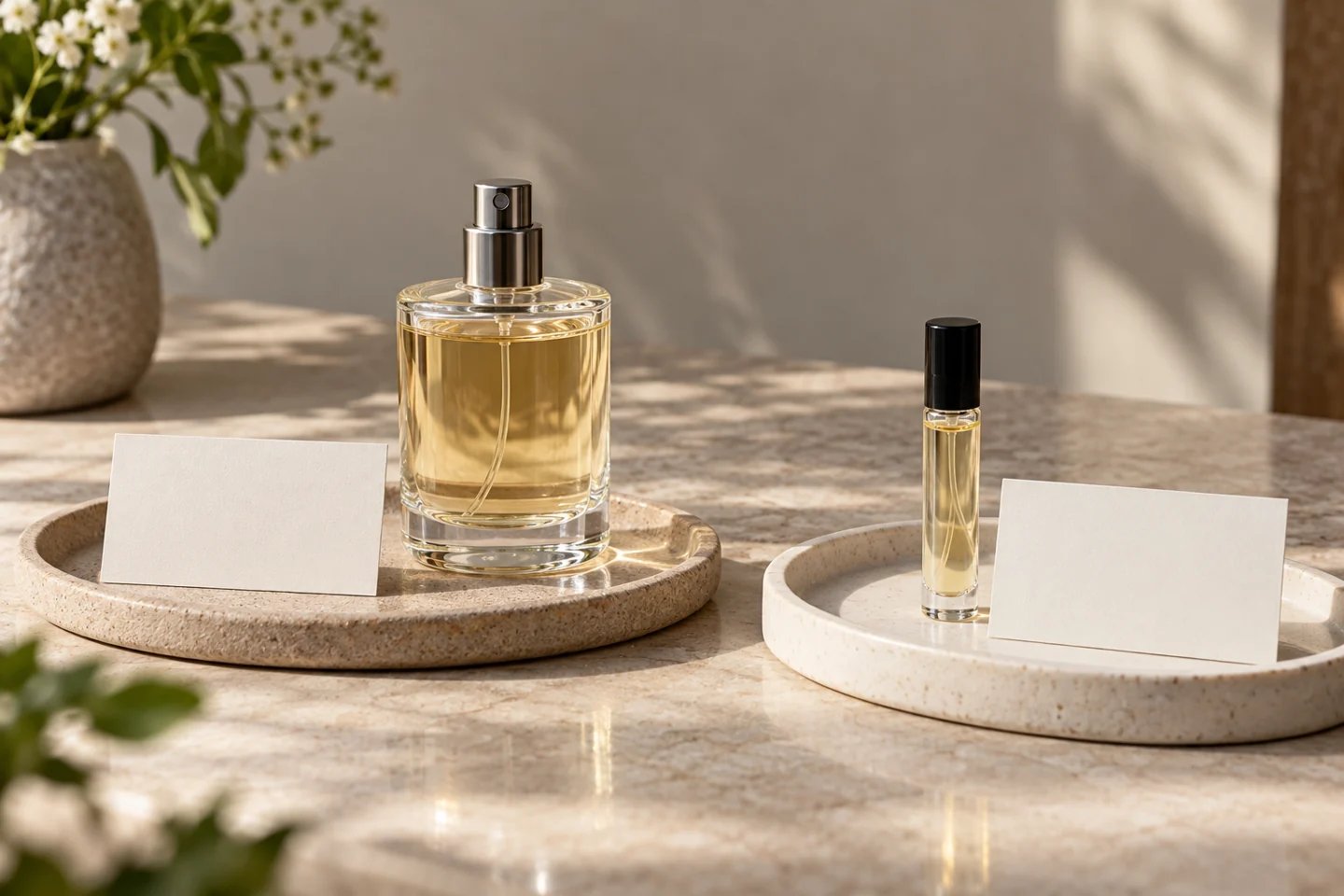
Published by FragranceLab, which operates the linked store and related journals. The preference brief is invented for illustration. No personal trial, community rating, brand formula or customer feedback is claimed. The three conceptual illustrations were generated with AI and show generic objects, not actual FragranceLab products or designer bottles. No Fragrantica text or images were used. Sources checked October 22, 2026; no independent comparative wear testing is reported.