Author: FragranceLab

  • Perfume Mixtures: How to Read a Blended Smell

    Perfume Mixtures: How to Read a Blended Smell

    Read perfume mixtures through the whole impression, the question being asked and the limits of current research. Keep note lists, formulas and buying choices separate.

    Perfume mixtures invite two different questions: what does the whole scent remind you of, and which parts can you name? You may enjoy a rounded floral impression without identifying a single flower. Alternatively, you may notice a familiar woody detail while struggling to describe the whole. Neither answer, by itself, reveals the formula.

    That distinction matters when you shop. A long list of notes can look like a promise of many separate experiences. Yet the listing cannot tell you how clearly each impression will stand out. Start with the finished scent you want to understand, rather than treating the description as a checklist you must complete.

    Read perfume mixtures before counting the notes

    First, keep the seller’s scent description separate from an ingredient declaration. A note such as rose describes a smell impression. It does not identify every substance that creates it. Likewise, several named notes do not establish the number of chemical ingredients in a bottle.

    The FDA’s fragrance guidance explains that fragrance ingredients in US retail cosmetics can be declared collectively as fragrance. Therefore, a label and a note list serve different purposes. Neither should be treated as a complete recipe when the manufacturer has not disclosed one.

    Consider an invented listing with citrus, rose and soft woods. You might describe the overall impression as a bright floral. That observation does not prove that the rose has disappeared or that a promised ingredient is missing. It records how you describe the complete scent, using the information available to you.

    Instead of counting successful guesses, write one useful sentence about the whole. Then add a detail you can describe with confidence. Leave the remaining notes as references to explore, rather than failures to explain. A short, honest observation is more useful than a technically impressive list borrowed from the seller.
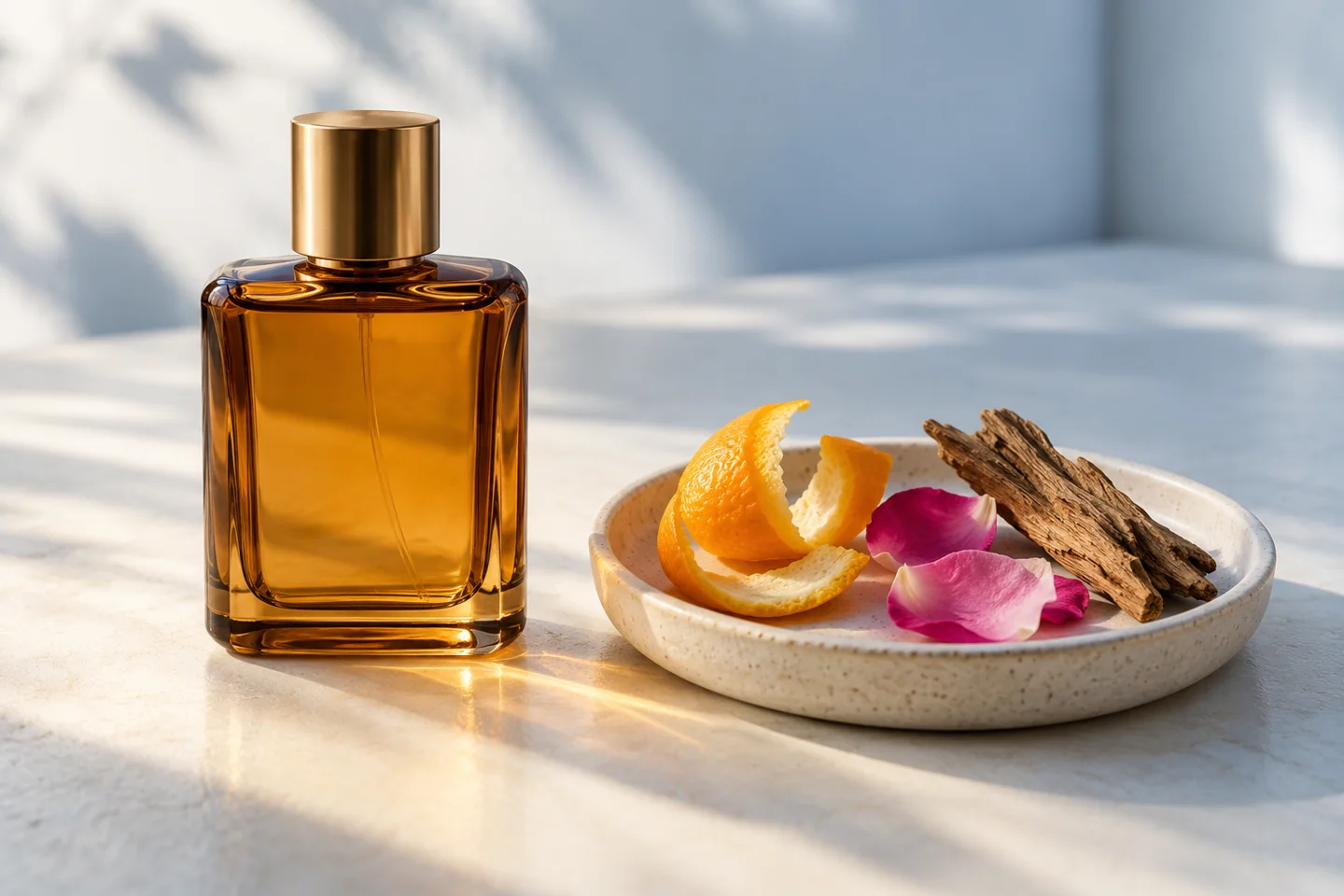
    Generic perfume mixtures illustration with a bottle and separate citrus, petal and wood props
    Editorial illustration generated with AI; generic objects, not actual products, ingredients or research evidence.

    Separate a whole impression from a difference test

    Next, notice what the question asks you to do. Describing one scent and choosing the odd sample from a group are different tasks. Naming a familiar impression is another task again. Success at one does not automatically demonstrate skill at all three.

    A 2026 study by Chang and colleagues in eLife makes task design important. Across three experiments, the researchers studied human adults using controlled discrimination training. Their report includes 96 adults and 1,295 sessions overall. Participants compared specified odor mixtures, molecular forms or concentrations under laboratory conditions.

    Training with mixtures in different proportions produced gains that transferred to untrained mixtures and the other nostril. However, the comparison tasks did not show the same pattern of transfer. This supports a specific finding about learning under the study’s conditions. It does not establish that buying more perfumes makes someone a better judge.

    Also, a discrimination result is not a liking score. Detecting a difference does not say which sample someone would choose for an ordinary day. Keep those decisions separate when reading research or comparing products. This article offers no smell-treatment routine or promise of cognitive benefit.

    What a newer prediction study actually measures

    A separate July 8, 2026 preprint by Pellegrino and colleagues asks how well component descriptions can predict mixture descriptions. It is a preprint, not a peer-reviewed conclusion. The researchers evaluated 432 mixtures using component odorants and a trained human panel.

    Panelists used a defined vocabulary of 51 descriptors. Within that setup, averaging component profiles predicted mixture ratings well. The result challenges the idea that every mixture needs a wholly unpredictable explanation. However, it does not turn a retailer’s three-word note list into a mathematical recipe.

    The study used moderate intensities and mixtures with no more than ten components. The authors also identify limits involving the vocabulary, measurement noise and concentration. Therefore, the findings cannot guarantee how a complex commercial perfume will smell on a particular person. Nor do they establish that two products with similar descriptions have identical formulas.

    The two papers answer different questions. One examines learning to distinguish controlled stimuli; the other models descriptive ratings. Read the task and outcome before comparing their conclusions. Neither paper is an assessment of FragranceLab products, and this guide does not borrow laboratory results as product-performance evidence.

    Keep perfume mixtures research out of the guessing game

    For a practical reading check, ask four questions. Which materials did the researchers actually use? What did participants do? How did the researchers measure the outcome? Finally, which conditions limit the conclusion?

    For example, a trained panel using a shared vocabulary is not the same as friends describing a perfume informally. A rating of similarity is not proof of equal composition. Likewise, identifying a different sample does not establish longer wear, stronger projection or greater value.

    These distinctions leave room for useful future work. Researchers can test broader mixtures, wider concentrations and different groups. They can also compare vocabulary-based ratings with other tasks. However, those possible directions are questions for further evidence, rather than features already available in a shopping tool.

    You do not need to reproduce a laboratory protocol to choose a fragrance. Instead, use research to set reasonable limits on a claim. If someone says a formula is proven identical because the notes match, ask where the formula evidence is. A persuasive scent comparison cannot supply information that was never measured.
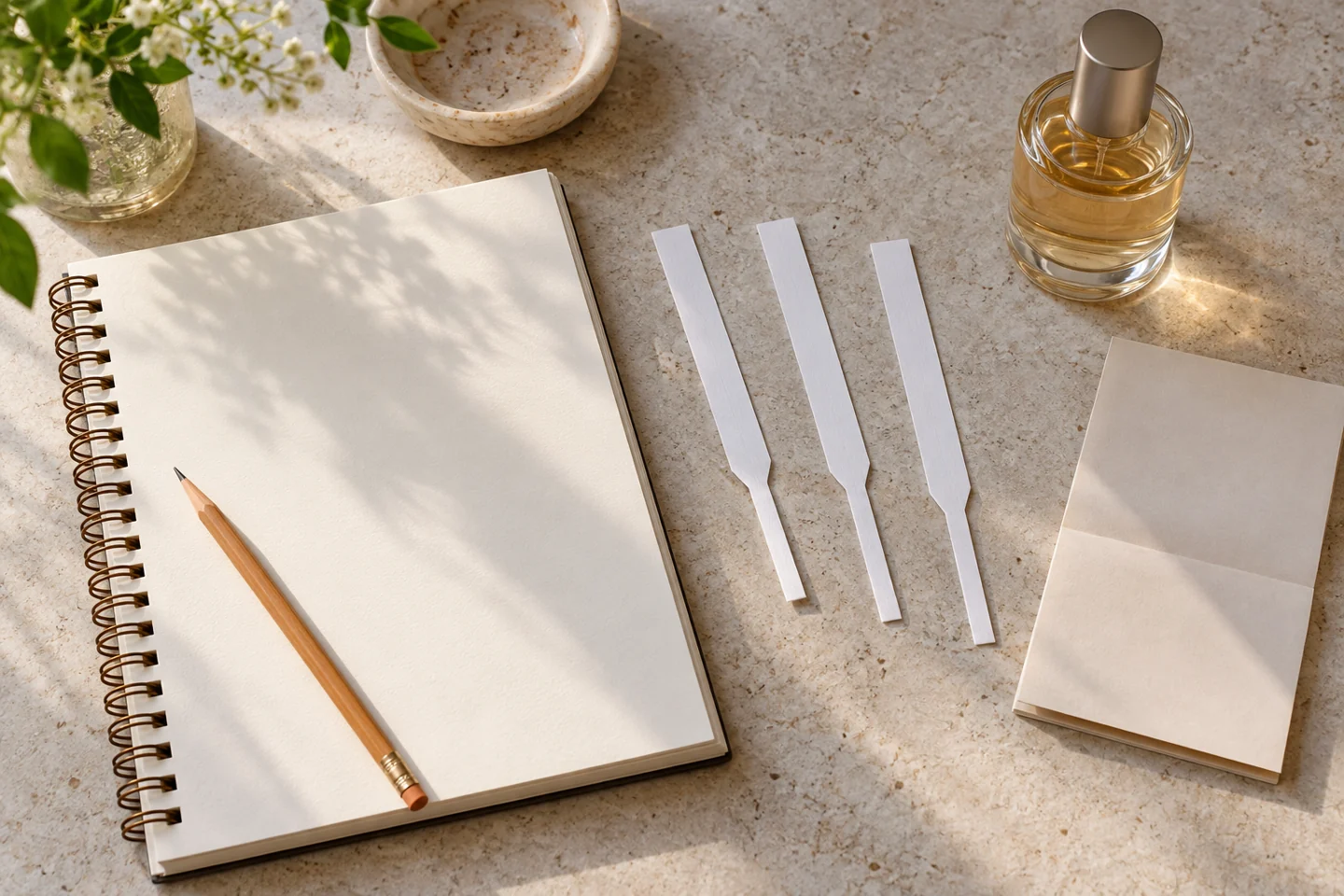
    Generic sample vials beside separate blank cards and paper strips
    Editorial illustration generated with AI; generic objects, not actual products, ingredients or research evidence.

    Compare perfume mixtures with useful notes

    Begin with the exact product identity. Record its name, format and source of information. Then distinguish the seller’s description from your own observation. You can do this in a plain notebook without assigning a score or pretending to conduct a controlled test.

    Here is an invented record for a fragrance you are considering:

    Field Example entry
    Seller’s description Citrus, rose and soft woods
    Whole impression A bright floral direction
    Detail I can describe A dry woody aspect
    Still uncertain Whether this suits the occasion I have in mind
    Formula information Not disclosed; notes are not a recipe

    Also, record relevant context in a few words. Perhaps you tried the item after another scented product, or only encountered it briefly. Keep that uncertainty visible. Do not turn a passing impression into an exact statement about ingredients, duration or another person’s experience.

    Follow the product’s directions and use an appropriate opportunity to assess it. There is no need to buy raw materials, alter a finished perfume or combine bottles to investigate this article. If the choice remains unclear, postpone it. More complicated scent language does not make a purchase more urgent.

    Finally, return to the decision you actually need to make. Does the complete fragrance interest you? Is the product identity clear? Do its size, price and terms fit your plans? You can answer those questions without proving that every advertised note is separately detectable.

    Bring the question back to the actual product

    Our FragranceLab inspired-fragrance collection is a place to explore finished products with their own descriptions. These are independent inspired alternatives, not original designer-brand perfumes. A designer reference does not establish identical ingredients, performance or affiliation. Judge the actual listed item and ask about any unresolved detail.

    Orders are dispatched within 24 hours of successful payment. Estimated delivery is 10–15 calendar days after dispatch. Shipping is calculated by weight at checkout, with no markup or free-shipping threshold. Prices include tax; we cover import duties and customs clearance fees.

    A useful conclusion can be simple: you like the overall scent and understand what you are buying. Naming every part is optional. Keeping preference, research and formula evidence distinct makes perfume mixtures easier to discuss without asking them to prove more than they can.

    Sources and editorial notes

    Sources and current store wording checked October 29, 2026. Published by FragranceLab Editorial Team. Codex performed the editorial checks; this does not imply independent specialist testing. All three illustrations were generated with AI and show generic objects. They are not actual products, ingredient photographs or research evidence. No Fragrantica images or community ratings were used.
  • Choosing an Inspired Perfume: Turn a Designer Reference into a Personal Brief

    Choosing an Inspired Perfume: Turn a Designer Reference into a Personal Brief

    Choosing an inspired perfume starts with a clear buying brief. Identify the exact product, choose your priorities and keep formula and performance expectations honest.

    You know the name of a perfume you enjoy. A shop offers an inspired alternative, and the familiar reference makes the decision feel nearly finished. Before choosing the actual product, take one more step. Decide what you want from this purchase.

    That step is not a demand for an elaborate scent vocabulary. A short brief can be enough. It separates the reference that started your search from the independent product you are considering, then identifies the qualities that matter in your own routine.

    FragranceLab publishes this journal and operates the linked inspired-fragrance store. Designer examples below identify original brand products; they are not claims that our independent alternatives share their formulas, test results or official brand affiliation. This guide reports no editor wear test or customer case study.

    Start with the exact reference, then set it aside

    Record the full name of the original fragrance and the version you mean. Include the format when you know it. A family name can point to several interpretations, so a remembered word or a recognizable bottle shape may leave an important question unanswered.

    Prada Beauty’s current US Paradoxe page makes the distinction visible. Alongside the original Eau de Parfum, its comparison section lists Sweet Chemistry Eau de Parfum and Radical Essence Parfum. The brand describes the original through a floral-ambery direction, Sweet Chemistry through a floral-fruity direction and Radical Essence through a floral-gourmand-woody direction. These official catalog descriptions were checked on October 22, 2026. They are not independent assessments. Nor do they announce that all three launched this week.

    The practical point is precision. A reference to Paradoxe alone may not identify the interpretation you have in mind. Nor does an inspired listing with a related reference automatically represent every version in that family. Resolve that ambiguity before comparing an offer.

    Once the reference is clear, let it do its limited job: it gives the search a starting direction. The next steps concern the actual product and what you want from it.

    Separate product identity from scent direction

    Keep two columns in your notes. One describes what the product is. The other describes the scent direction you want to investigate. A product can belong in the second column’s shortlist without being the same object as the original in the first.

    Question Useful information What it does not establish
    What is being sold? Exact independent product name, seller, format and size Designer-brand manufacture or authorization
    Why did it enter the shortlist? The stated reference or descriptive direction An identical composition
    What can I check before ordering? Actual product details, ingredient information where available and written terms An editor’s personal wear result
    What remains personal? Whether you enjoy the finished fragrance in your routine A result guaranteed by a familiar name

    This is especially helpful when several shops use similar descriptive language. Compare the information each provides about its own product. Do not fill a gap in one listing with information taken from the designer’s website.

    An ingredient list also has limits. The FDA explains that fragrance components in US cosmetics may be declared collectively as fragrance. A public declaration is therefore not necessarily a complete aromatic formula. A shared note word or ingredient term is not enough to prove a matching composition.

    Different generic fragrance containers on separate trays with blank identity cards
    Editorial illustration generated with AI; generic objects, not actual FragranceLab products, designer bottles or test evidence.

    Write two priorities and one acceptable difference

    Make the brief smaller than the marketing description. Choose two qualities you actually want to investigate, then identify one difference you could accept. The aim is a decision you can use, not a list that sounds sophisticated.

    Here is an invented preference brief, not an account of anyone’s experience: “I want a floral direction with a soft woody finish. I would like it for ordinary afternoons. I can accept a different opening, but I do not want to buy solely on a promise of maximum strength.”

    Notice what this leaves open. It does not assign ingredients, hours of wear or a similarity percentage. Those would need their own evidence. It also does not insist that every aspect of the original be reproduced before an independent fragrance can be enjoyable.

    Someone else’s brief could reasonably be different. They may care most about an opening impression, a particular format or a scent they already know how to use. The useful brief is the one that explains your choice, rather than borrowing another person’s certainty.

    Decide which uncertainties matter before paying

    There are two kinds of missing information to resolve. Product questions belong with the seller: the exact item, size, format, current availability and applicable order terms. Preference questions concern whether the finished fragrance suits you. An answer to one type does not settle the other.

    If the listing leaves a product detail unclear, ask about that specific detail. “Which item and format would arrive?” is more useful than “Is this the best version?” Keep the answer associated with the correct product instead of treating it as a statement about every fragrance in a range.

    If an opportunity to try the actual product exists, use it without assuming that every seller offers samples. If it does not, acknowledge the preference uncertainty in your purchase decision. A long description cannot remove that uncertainty merely by adding more adjectives.

    Check the actual shipping and return information before ordering, including any conditions relevant to opened fragrance. This article creates no new promise about delivery, refunds, samples or exchanges. If a term matters to the decision and remains unclear, resolve it before payment.

    Blank preference notebook and spaced scent strips beside a closed generic bottle
    Editorial illustration generated with AI; generic objects, not actual FragranceLab products, designer bottles or test evidence.

    Judge the finished purchase on its own terms

    When you have the product, keep its identity attached to your observations. Follow its own directions. An independent inspired fragrance should not inherit the designer’s application instructions, ingredient claims or reported performance simply because the reference is familiar.

    A brief record can answer three questions: what product did I use, in what ordinary setting, and what would I choose differently next time? Write a preference in plain language. “I would choose something less sweet for this setting” is more useful than a precise-looking score you cannot explain.

    Avoid turning a first impression into an assertion about every bottle or every wearer. Equally, there is no need to force a favorable verdict because the description sounded right. The brief is a tool for learning what you want, not a contract to like the purchase.

    Choosing an inspired perfume: your next step

    Before ordering, you should be able to name the exact item, explain the scent direction that interests you and identify what remains uncertain. That is a stronger starting point than choosing by a designer reference alone.

    If you want to explore the independent products currently listed by our store, browse the FragranceLab collection and read the individual product details. The Prada examples in this article do not imply that those official products or every discussed interpretation are available here. Our catalog and its current information determine what can actually be ordered.

    A good brief leaves room for an enjoyable alternative while keeping expectations honest. You are choosing a finished product for your own use, with a clear identity and a purpose you can explain.

    Sources and editorial notes

    Published by FragranceLab, which operates the linked store and related journals. The preference brief is invented for illustration. No personal trial, community rating, brand formula or customer feedback is claimed. The three conceptual illustrations were generated with AI and show generic objects, not actual FragranceLab products or designer bottles. No Fragrantica text or images were used. Sources checked October 22, 2026; no independent comparative wear testing is reported.

  • A Wholesale Quote Is Not a Cash Plan: Comparing Your First Fragrance Order

    A Wholesale Quote Is Not a Cash Plan: Comparing Your First Fragrance Order

    Compare wholesale fragrance quotes using a 24-bottle trial and a 48-bottle order. Separate supplier evidence, landed cost, contribution and cash tied up in unsold stock.

    A supplier offers a lower bottle price if you double the order. The saving is real on paper. The harder question is whether the extra stock deserves the extra cash today.

    For a small fragrance shop, comparing suppliers involves two separate decisions. First, are the goods and terms acceptable? Second, does the order fit the business’s cash position? A tidy spreadsheet cannot rescue an unclear product identity. Equally, a reliable supplier can still offer a quantity that is too large for your first test.

    This guide uses a deliberately invented 24-bottle versus 48-bottle comparison. The numbers are not FragranceLab prices, supplier quotations, market averages or a sales forecast. Use the method with your own written quotes and actual costs.

    Start with comparable wholesale fragrance quotes

    Send each supplier the same short request. Specify the exact products, bottle sizes, quantities, delivery destination and proposed order date. If you need a mixed assortment, ask for the price of that particular mix. A minimum that applies separately to each scent can create a very different commitment from a minimum across the whole order.

    Ask the supplier to separate product charges, inbound delivery and any other quoted charges. Record which expenses are excluded or still unknown. If duties or other destination charges apply to your purchase, obtain the figures for your circumstances rather than treating an international quote as a domestic delivered price.

    A useful comparison sheet has a column for the question, a column for each supplier’s answer and a final column for evidence still missing. Keep the original email or quotation with its date and validity period. Write “not confirmed” in an empty field. A blank cell otherwise has a habit of turning into a zero when someone totals the order.

    Confirm when payment is due and when dispatch is expected. A dispatch estimate is different from a promised arrival date. If a lead time depends on a product becoming available, make that condition visible in the comparison.

    Product identity comes before the price calculation

    What will arrive in the box? Separate original designer goods, independent fragrances, private-label products and inspired alternatives. Ask for the exact product name, manufacturer or supplier identity, packaging information, bottle size and photographs of the item being quoted. Do not infer authorization from a familiar scent name or an attractive bottle photograph.

    Request an example of the paperwork provided with the order and the process for reporting an incorrect item, shortage or damage. Ask whether a sample represents the same product offered in the larger order. These questions establish a paper trail; they do not certify a supplier or prove a product claim on their own.

    The FTC’s small-business advertising guidance explains that advertising claims need support and must not mislead. In practical terms, a retailer needs evidence for what its own listing promises. Therefore, a supplier’s enthusiastic description is a prompt to investigate, not a ready-made statement to repeat unchanged.

    Treat unresolved identity or material specification questions as a reason to pause that quote. Do not award extra points for a low price that depends on assumptions about what the product is.

    Compare the whole commitment, not the unit-price headline

    Here are two hypothetical domestic US-dollar quotes. Assume the bottles are otherwise acceptable, there are no additional inbound charges in this particular example, and the full order must be paid before dispatch. Actual purchases need their own complete cost list.

    Comparison Quote A Quote B
    Bottles required 24 48
    Product price per bottle €18.00 €16.00
    Product subtotal €432.00 €768.00
    Inbound delivery €48.00 €72.00
    Total initial cash payment €480.00 €840.00
    Landed cost per bottle in this example €20.00 €17.50

    The landed cost is the product subtotal plus the stated inbound delivery, divided by the number of bottles. Quote B saves €2.50 per bottle under these assumptions. It also requires €360 more cash upfront and leaves you responsible for selling 24 additional bottles.

    Neither fact cancels the other. Quote B may suit a shop with demonstrated demand and enough working cash. Quote A may be a useful smaller experiment. The comparison becomes clearer when the decision is written as “spend another €360 to carry another 24 bottles,” rather than simply “save €2.50.”

    Do not assign all the delivery cost to the first bottle sold or forget it because it appears on another invoice. For mixed sizes or products, equal allocation per bottle is only a simplifying choice. Use a sensible, documented allocation when weight, value or handling makes the actual cost pattern different.

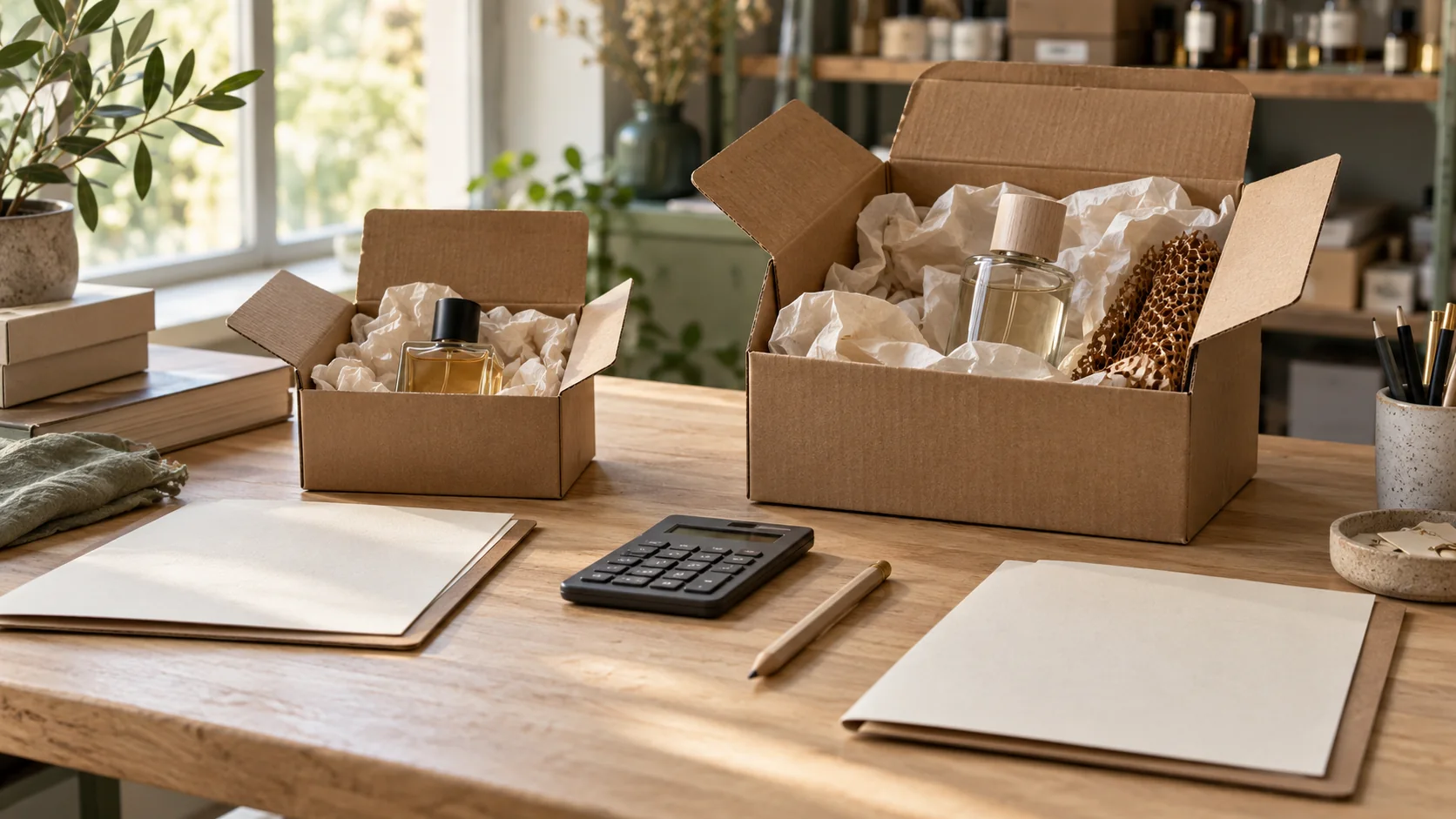
    Generic fragrance bottles, packaging, a calculator and a blank ledger arranged for cash planning.
    Editorial illustration generated with AI; generic objects, not actual FragranceLab products or supplier evidence.

    Margin and cash answer different questions

    Assume a retail selling price of €40 per bottle and these invented costs for each completed one-bottle order: €2 packing, €2 payment processing and €5 outbound delivery. That is €9 per order beyond the landed bottle cost. Fees are assumptions, not quotes from a payment provider or delivery service. Advertising, refunds, taxes, financing and fixed expenses are not included yet.

    At the assumed €40 selling price Quote A inventory Quote B inventory
    Landed cost of the bottle sold €20.00 €17.50
    Gross profit per bottle €20.00 €22.50
    Gross margin: gross profit ÷ sales 50.00% 56.25%
    Other assumed order costs €9.00 €9.00
    Contribution before omitted costs €11.00 €13.50

    Track cash alongside sales margins

    Those margins describe the modeled sale, not money available to withdraw. Now suppose only 12 bottles sell during the first 30 days and all customer payments clear during that period. Sales receipts are €480; the assumed packing, processing and outbound costs total €108. That leaves €372 toward recovering the initial inventory payment.

    With Quote A, the cash movement from this purchase-and-sales cycle is €372 minus €480, or negative €108. With Quote B, it is €372 minus €840, or negative €468. This is before the omitted costs. The same sales pace leaves a larger amount of cash tied up in the larger order.

    Meanwhile, the modeled contribution from those 12 sales is positive: €132 with A and €162 with B. There is no contradiction. You paid for unsold stock as well as sold stock. A still has 12 bottles with an allocated inventory cost of €240; B has 36 with a cost of €630. Inventory is not the same as cash in the bank, and its cost is not a promise of its future selling value.

    Keep a cash sheet and a sales-margin sheet alongside each other. In this simplified model, the full purchase payment belongs in the cash sheet, while the landed cost of the units sold enters the margin calculation. Subtracting the whole inventory purchase again from that margin would mix the two views and double-count part of the cost.

    Check the sales pace the saving needs

    Start with observed completed sales if the shop has them. For a new assortment, use several clearly labeled scenarios rather than presenting your preferred number as a forecast. In the example, try six, 12 and 24 sales in the first month. Each scenario should show the bottles remaining, cash committed and contribution before omitted costs.

    Then test one assumption that could change the decision: a lower realized selling price, higher delivery cost or additional advertising expense. At a €36 selling price with the other modeled costs unchanged, contribution falls to €7 for A and €9.50 for B. A discount changes the cash recovered from each sale even when the supplier price stays fixed.

    For a separate illustration, suppose monthly fixed expenses are €330 and the original €40 sale assumptions apply. Divide fixed expenses by unit contribution to model the break-even quantity. For A, €330 ÷ €11 = 30 bottles. With B, €330 ÷ €13.50 requires rounding up to 25 bottles. For further business-finance exercises, the FDIC’s Money Smart for Small Business includes financial-management training. This is an estimate using specified costs, not a guarantee or a calculation of how quickly the original purchase cash returns.

    Notice that A’s 24-bottle first order cannot supply 30 sales without replenishment. However, a reorder may have a different freight allocation or price. Update the model before extending the example to a whole month or several orders. Likewise, include actual advertising, expected return costs and every other relevant expense before using the calculation to judge viability.

    Put receiving and problem resolution in writing

    Before paying, agree on how an issue is documented and who receives the report. Ask about the reporting window, information required, and available remedies. A vague promise to “take care of it” is difficult to compare with a written procedure explaining replacement, credit or refund conditions.

    At receipt, compare the goods with the confirmed list: SKU or product identifier, quantity, size, packaging and visible condition. Record discrepancies before making the inventory available for sale. Keep the order paperwork and photographs together so that a later question can be traced to the right delivery.

    Confirm that the proposed transport service accepts the particular shipment and that any required packaging and documentation are addressed. For US postal shipments, consult the current USPS Publication 52 and the applicable product classification. This guide is not a shipping clearance and does not assume every fragrance can travel by the same service.

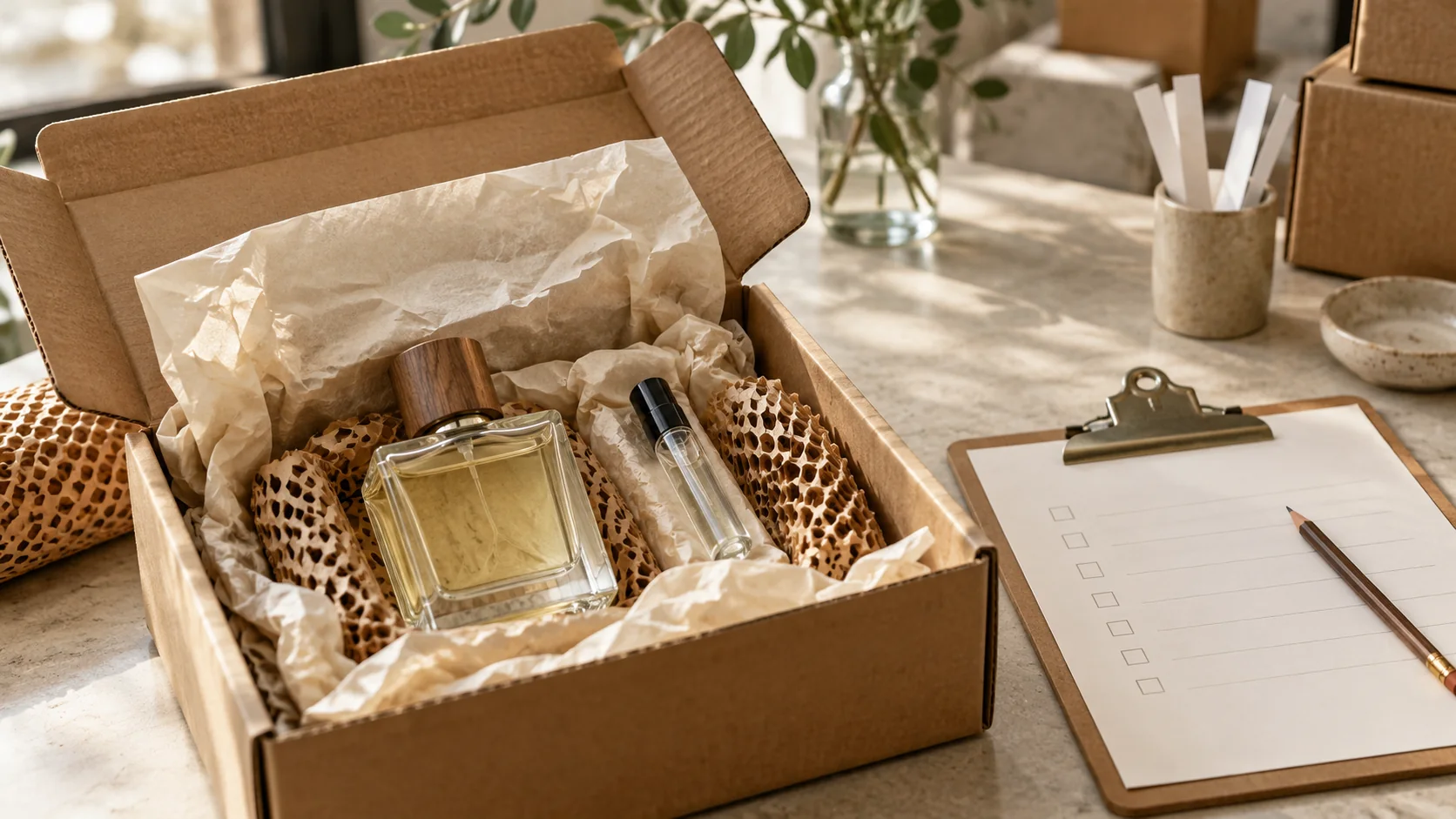
    An opened sample parcel with an unbranded fragrance bottle, packing materials and a blank receiving checklist.
    Editorial illustration generated with AI; generic objects, not actual FragranceLab products or supplier evidence.

    Make the first order a bounded experiment

    Write down what the order is supposed to teach you before selecting its size. You might be checking whether a particular assortment attracts repeat orders, whether descriptions answer customers’ questions, or whether receiving and dispatch fit your available time. “Buy as much as the budget permits” gives no useful test to evaluate afterward.

    Set a review date and a cash limit. Keep enough money available for expenses the purchase does not cover. If a supplier offers a larger-order saving, ask whether it remains available on a later reorder rather than assuming today’s offer is your only chance. The answer may be no; knowing that is still better than inventing urgency for yourself.

    A compact decision note can contain five lines:

    • Exact products and quantities accepted, with unresolved questions listed.
    • Total cash payment and when it is due.
    • Modeled contribution at the normal price and one lower-price scenario.
    • A sales-pace assumption, remaining-stock calculation and cash reserve.
    • The next review date, receiving procedure and reorder conditions to verify.

    This makes a future comparison possible. You can look back at the assumptions and compare them with actual sales, costs and supplier performance instead of judging the purchase only by how encouraging it felt when the quote arrived.

    Where FragranceLab fits

    If you are exploring the assortment available from our store, browse the FragranceLab collection and verify the current product details and ordering terms before making your own comparison. FragranceLab offers independent inspired alternatives, not original designer-brand perfumes. The hypothetical quotes and costs above describe neither our prices nor our supplier terms.

    Published by FragranceLab, which operates the linked store and the related journals below. This is an editorial planning guide, not a supplier certification, personal sales case study or profit promise.

    Sources and editorial notes

    All figures are invented US-dollar teaching examples. Calculations and linked sources were reviewed by Codex editorial checks on October 15, 2026; this does not imply review by a human financial adviser. Illustrations were generated with AI and show generic objects, not actual FragranceLab stock or supplier evidence. No Fragrantica images or community ratings are used in this business article.

  • Why Fragrance Lasts—and Why It Sometimes Doesn’t

    Why Fragrance Lasts—and Why It Sometimes Doesn’t

    Explore perfume longevity, projection and concentration. Learn why the same scent performs differently in daily life.

    “How long does this perfume last?” sounds like a question that should have a straightforward numerical answer. In practice, the same fragrance can be described very differently by two people. One wearer may notice the scent becoming quiet after a short time; another may still detect it later. Even the same person can have different impressions on different days.

    That variation is not automatically evidence that a product is good or bad. The experience of fragrance depends on formulation, application amount, surrounding conditions, and the human sense of smell. Understanding these factors is more useful than expecting every bottle to meet a single universal number.

    This is a practical introduction to fragrance behavior, not a laboratory performance test or a promise about any specific product.

    1. What does perfume longevity actually mean?

    People use longevity to describe several things. They may mean time noticeable in the air, time detectable close to skin, or time the wearer remains aware of it. Those experiences are related, but they are not identical.

    A scent may appear strong at first and then settle into something that is perceptible only at close range. That does not necessarily mean it has fully disappeared. Conversely, a dramatic opening may give the impression of strength without predicting how the fragrance will behave later.

    A useful way to evaluate longevity is to describe the context rather than use a number alone. For example: “I noticed the opening clearly, the fragrance became closer to skin after a while, and I could still detect a trace later.” Such observations are more informative than an unsupported claim that a perfume “lasts all day on everyone.”

    2. Longevity and projection are different qualities

    Longevity describes how long some aspect of a fragrance remains detectable under particular conditions. Projection describes how far or how noticeably it radiates beyond the immediate area of application. Neither has a single universally agreed casual measurement among consumers.

    Imagine two different compositions. One may be noticeable across a room for a short period but fade relatively quickly. Another may stay close to the skin for longer without being conspicuous to other people. The first is not automatically higher quality, and the second is not necessarily weak.

    Choice depends on use. In an elevator or shared workplace, a more restrained fragrance may be more comfortable. Someone choosing for an outdoor occasion might prefer a different presence. Performance should be evaluated alongside suitability, composition, and personal enjoyment.

    3. Why fragrance changes after you spray it

    Perfume is typically a mixture of aromatic materials and a carrier. Different components have different volatility and perceptual characteristics. As the mixture is exposed to air, its smell can change. The opening impression may be brighter; the later character may seem softer, woodier, sweeter, or more musky.

    You may see descriptions organized into top, middle, and base notes. These are helpful storytelling and evaluation tools, but they are not rigid physical compartments. Fragrance materials overlap, and some may remain perceptible across much of the wearing experience.

    An opening rich in bright citrus-style materials can be memorable without telling you everything about the drydown. Rather than assessing a perfume in the first minute, revisit it over time. Notice how the overall character changes, not only whether the initial note is still obvious.

    Ingredients, accords and the carrier do different jobs

    An odor description such as “rose” is not an ingredient inventory. Aromatic materials contribute odor; a carrier helps deliver the mixture; other functional ingredients can support stability or formulation. IFRA’s manufacturing overview describes both extracted natural materials and manufactured aroma materials. Neither origin alone establishes a finished product’s performance. We do not know FragranceLab’s proprietary formulas or ingredient percentages from a note list, and this guide does not infer them.

    4. Does Eau de Parfum always last longer than Eau de Toilette?

    Not always. Eau de Toilette (EDT) and Eau de Parfum (EDP) are concentration-related labeling conventions, but there is no single universal range followed by every brand. Two products carrying the same label can still have very different formulas.

    Within a fragrance family, an EDP may contain more fragrance materials than its EDT counterpart. That alone does not guarantee stronger projection, better quality, or a specific number of hours. Different versions may also be composed to smell different, not simply diluted or concentrated copies.

    To compare them fairly, consider the actual fragrance character and intended use. If possible, test both versions under similar conditions. Avoid interpreting a concentration label as a performance warranty.

    The IFRA concentration FAQ explicitly notes that these descriptors have no universally fixed international concentration definition.

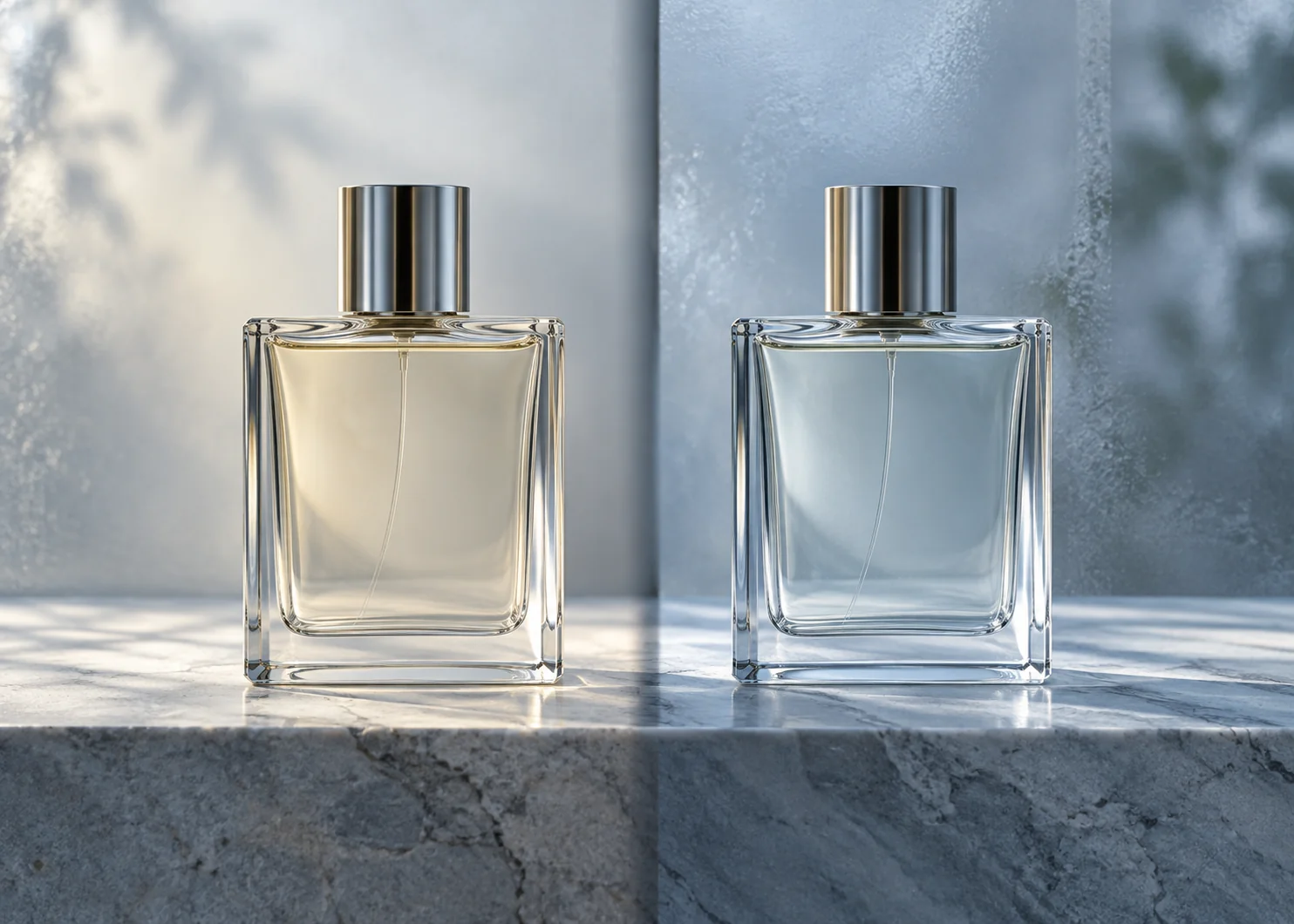
    Two unbranded perfume bottles presented side by side for a discussion of concentration labels.
    Editorial illustration generated with AI; generic bottles and objects, not actual FragranceLab products or measured results.

    5. Why you may stop smelling your own perfume

    Human sensory systems respond to repeated stimulation. With prolonged exposure to a familiar odor, its perceived intensity can diminish—a phenomenon often described as olfactory adaptation. This is one reason a person may stop noticing a fragrance that another individual can still smell.

    It is tempting to solve the problem with extra sprays. Yet a wearer who has adapted to the scent may unintentionally apply more than is comfortable for people nearby.

    If you think a fragrance has disappeared, do not immediately assume it needs reapplication. Consider the time, environment, and amount already used. If you ask someone else for feedback, invite an honest answer and remember that smell sensitivity differs between people.

    Adaptation does not mean every fragrance remains present indefinitely. It means your own perception is only one part of the evaluation.

    A study that keeps the explanation honest

    In Mignot and colleagues’ 2022 human study, researchers recruited 35 participants and repeatedly presented four odorants under controlled conditions. Perceived intensity tended to decline for some odorants, but electrical responses measured at the olfactory epithelium did not show a clear overall decrease.

    The study supports caution about a simple “receptors switch off” explanation. It did not test commercial perfume wear time, and it cannot tell us how long any bottle will last. Future work combining controlled exposure, perception ratings and physiological measurements may clarify these differences; this remains a research direction, not a consumer performance claim.

    6. Paper, skin and clothing are not interchangeable test surfaces

    Paper blotter strips can help compare fragrances, especially their opening impressions. Skin adds warmth, movement, and a different surface. Clothing can retain scent in a different way and may also be vulnerable to staining or damage.

    Because the surfaces and circumstances differ, a fragrance may smell or persist differently on each. A paper-strip test is useful for choosing candidates; it should not be treated as an exact prediction of what will happen during daily wear.

    If you decide to test on skin, follow the product’s application and safety guidance. Avoid applying fragrance to irritated or broken skin, and stop using a product if it causes an adverse reaction. If you consider applying to fabric, check compatibility first and avoid delicate or light-colored materials that may stain.

    Most importantly, try to compare like with like: similar application amounts, similar observation times, and a similar environment. Informal experiments can help you understand your preferences, but they are not laboratory proof.

    7. Temperature, airflow and setting change the wearing experience

    Surrounding conditions influence how fragrance materials move and how people experience them. Temperature can affect evaporation, while airflow changes how odor molecules are carried away from the application area. Clothing, activity, and time spent indoors or outdoors add further variation.

    This can help explain why a fragrance feels more noticeable in a warm, enclosed room than during a breezy outdoor walk. It can also explain why a favorite scent seems different when the weather changes.

    There is no universal adjustment formula. Applying twice as much perfume does not reliably produce twice the enjoyment or twice the wear time. Start modestly and choose the amount that fits the setting.

    8. Can skin care influence fragrance perception?

    People often notice that fragrances behave differently depending on skin condition and application habits. Moisturizers can change the surface on which a fragrance is placed, and individual skin characteristics may contribute to differences in perception. However, simple online rules such as “moisturized skin always adds exactly four hours” are not reliable.

    If you experiment with a moisturizer, choose one suitable for your skin and avoid assuming every combination will behave the same. Do not add products solely to force a promised longevity result.

    A practical comparison is to note how the fragrance feels during your normal routine over several wears. Consistent observations are more useful than a single dramatic claim.

    The FDA fragrance guidance notes that some people can be sensitive to ingredients even when most users tolerate them. An ingredient list or a product-specific question to the manufacturer is more useful than a universal “safe for everyone” promise.

    9. Storage protects the product you bought

    Fragrances can change over time, and exposure to heat, light, and air may contribute to deterioration of some materials. A bathroom with frequent temperature and humidity changes, a sunny window, or a parked car are generally poor choices for long-term storage.

    Keep bottles closed and store them in a relatively cool, dry place away from direct sunlight. Use the manufacturer’s instructions where available. Do not assume that refrigeration is required or beneficial for every formula; extreme or fluctuating conditions can introduce other issues.

    Appearance alone does not reveal every aspect of product condition, but an unexplained major change in odor, color, or appearance is a reason to stop and assess the product. If you are uncertain about safety or authenticity, contact the seller or manufacturer for specific guidance.

    A perfume bottle stored away from direct sunlight in a shaded interior.
    Editorial illustration generated with AI; generic bottles and objects, not actual FragranceLab products or measured results.

    10. A better way to make your own wear notes

    You can learn a great deal from a repeatable, low-pressure observation routine:

    1. Select one fragrance and review its instructions and ingredients.
    2. Apply your usual modest amount in a normal setting.
    3. Note the opening impression and the time of application.
    4. Check again at a few reasonable intervals without continuously sniffing the same spot.
    5. Describe whether the character, closeness, or your own awareness has changed.
    6. Repeat on another day before drawing a strong conclusion.

    Your note might say, “Bright initially; softer and warmer in the afternoon; comfortable for close working spaces.” It does not have to award a score or compare every fragrance against a fixed hourly target.

    If you run a fragrance retail business, be cautious about turning personal wear notes into advertising claims. Customers may appreciate an honest description of character and application, but unsupported universal performance statements can mislead.

    11. What longevity does—and does not—say about quality

    Longevity is a useful property, but it is not the whole product. A fragrance can be pleasant, coherent, well suited to an occasion, and relatively understated. Another can be forceful yet uncomfortable or poorly matched to the wearer’s preferences.

    A retailer should focus on accurate product identity, physical condition, safe and lawful presentation, and transparent customer expectations. FragranceLab sells independent inspired alternatives; it does not claim that its products are identical to original designer formulations or that every person will experience a fixed wear time.

    When reading reviews, look for details about where and how a product was worn. One person’s account can help establish a range of experiences, but it should not be mistaken for a controlled test or universal result.

    Frequently asked questions

    Why does my perfume seem to vanish after an hour?

    Several explanations are possible: changes in the scent’s character, a quieter drydown, environmental conditions, and olfactory adaptation. An early loss of awareness does not by itself prove that no fragrance remains.

    Should I spray more if I want better performance?

    More product generally creates a larger dose, but it does not guarantee a better experience or proportionately longer wear. Be mindful of shared spaces, product guidance, and other people’s comfort.

    Does applying perfume to clothes make it last longer?

    Fragrance can persist differently on textiles than on skin, but results vary. Some products may stain or damage fabrics. Check garment care and product directions before applying.

    Is EDP automatically higher quality than EDT?

    No. These labels indicate formulation or concentration conventions rather than a quality ranking. The complete composition and the suitability for your preferences matter more.

    Can I trust a universal “eight-hour” claim?

    Treat exact performance promises cautiously unless their measurement conditions and evidence are clearly provided. Personal experiences vary, and a claimed duration does not communicate projection or comfort.

    The useful question is not only “how long?”

    A better fragrance conversation asks three things together: How does it smell? How does it behave in the places where I wear it? And do I enjoy it as it changes?

    Learning the distinction between longevity, projection, adaptation, and storage helps you make a more thoughtful purchase without chasing a number that may not fit your experience.

    Explore FragranceLab: See our independent inspired fragrance collection. Read product information and ordering terms carefully; inspired alternatives are not original designer-brand perfumes.

    Sources and editorial notes

    Reviewed on October 15, 2026. These are editorial guides, not personal wear tests, supplier certifications or product performance guarantees. Images are AI-generated conceptual illustrations, not photographs of products offered for sale.

  • How to Choose the Right Fragrance for Everyday Life

    How to Choose the Right Fragrance for Everyday Life

    Learn how to choose the right perfume for your daily life. Compare fragrance families, routines, weather and your own preferences.

    Choosing a fragrance can feel more complicated than it needs to be. A product description may list a dozen notes. Meanwhile, social media may crown a new favorite every week. Two people can also disagree completely about the same bottle. None of that means you need expert knowledge to choose well.

    A better starting point is your real life: where you plan to wear a fragrance, what kinds of smells you enjoy, and how much presence you want the scent to have. Once you have those answers, fragrance families and testing methods become useful tools rather than another source of pressure.

    This guide offers a calm, practical way to narrow your options—whether you are choosing your first bottle, replacing an everyday favorite, or buying a gift.

    1. Start with the moment, not the brand name

    Picture a normal week. You might spend one day at an office, another running errands, and an evening with friends. You might want one fragrance that works comfortably for all three, or you may enjoy changing scents with the occasion.

    Ask yourself:

    • Where will I wear it most? A close shared workspace may call for a more restrained application than a casual outdoor setting.
    • What do I want it to feel like? Bright and energetic, soft and comforting, fresh and understated, or warmer and more expressive?
    • How often will I use it? A daily favorite and a special-occasion bottle serve different purposes.
    • What have I enjoyed before? Think of perfumes, body-care products, flowers, foods, or natural surroundings whose smells you like.

    These questions form a better shortlist than a trend ranking alone. A fragrance that is famous for being dramatic may not be the one you enjoy wearing to work every morning.

    2. Learn four broad fragrance directions

    Fragrance families are a shared vocabulary, not a strict filing system. A single perfume may move across several descriptions, and note lists do not reveal the complete formula. Still, four broad directions can help you begin.

    Fresh and citrus-led

    Think of sparkling citrus, green leaves, herbs, and airy impressions. Fresh scents can feel bright and easygoing, although not every fresh perfume is light or short-lived. Citrus-led openings also change as the rest of the fragrance develops.

    Floral

    Floral compositions range from light and transparent to rich and velvety. Rose, jasmine, orange blossom, and other flower-inspired accords may be interpreted in many ways. “Floral” does not automatically mean sweet or traditionally feminine.

    Woody and aromatic

    Sandalwood-inspired smoothness, cedar-like dryness, vetiver, herbs, and aromatic notes can create restrained or distinctive scents. This direction often appeals to people who enjoy texture and structure rather than obvious sweetness.

    Warm, sweet and amber-like

    Vanilla, resins, soft spices, and gourmand-style accords can feel cozy or expressive. The same note can take on different characteristics depending on its partners: vanilla might seem airy, creamy, smoky, or woody.

    Try this exercise: choose one scent from two different directions and smell them separately. Describe the overall feeling without looking at their note lists. Your own vocabulary is more useful than repeating marketing phrases.

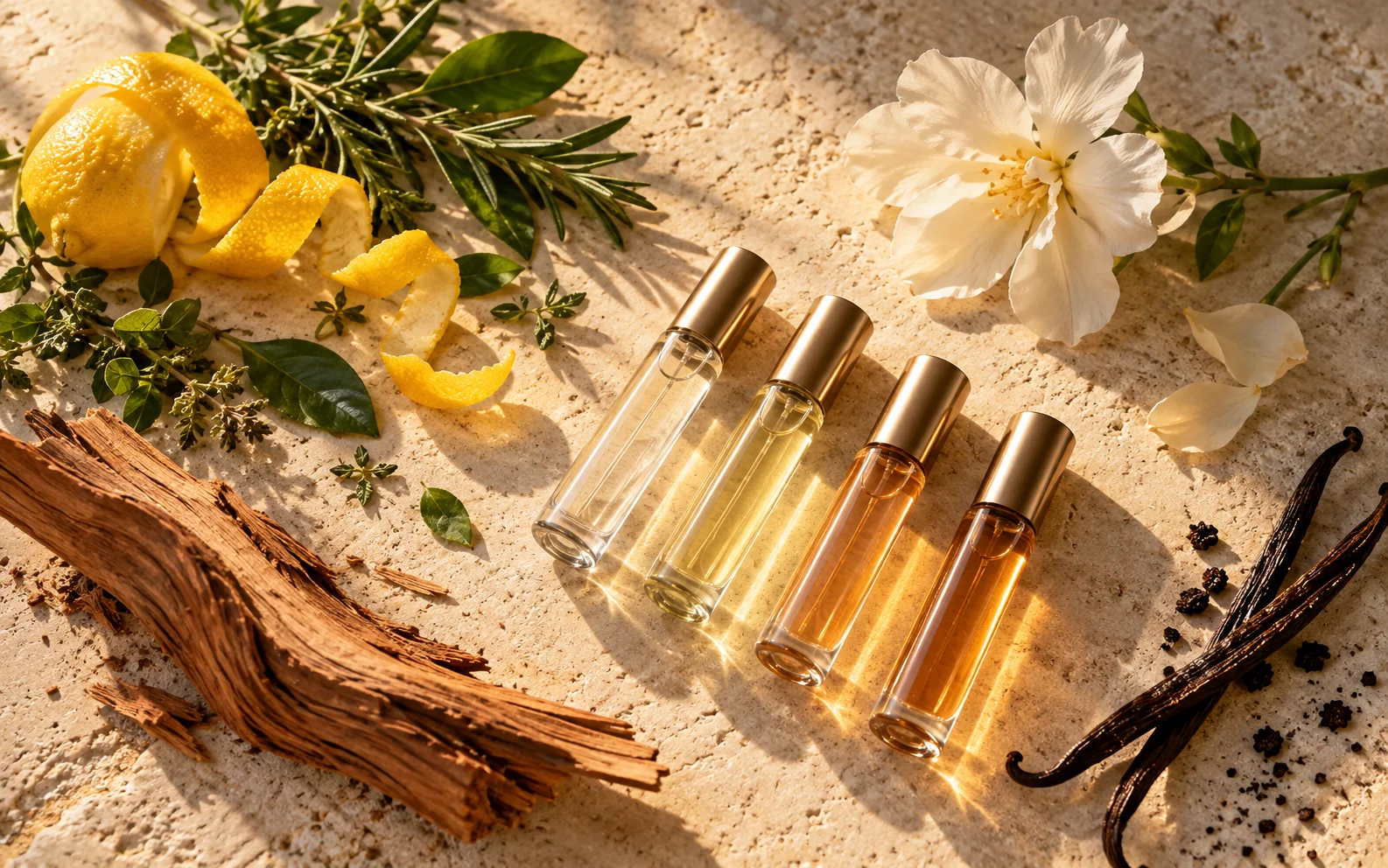
    Four botanical groupings representing fresh, floral, woody and warm fragrance directions.
    Editorial illustration generated with AI; generic bottles and objects, not actual FragranceLab products or measured results.

    3. Do not choose by notes alone

    A perfume described with bergamot, rose, and musk will not necessarily smell like a literal mix of three raw ingredients. Notes are often interpretive descriptors, and the way materials interact matters enormously.

    Think of notes as hints about the character of a fragrance. They can tell you where to begin, but they do not guarantee the final effect. Two perfumes featuring “rose” may have very little in common once you smell them.

    When browsing online, pay attention to the complete product description, especially words that explain balance and mood. Is the scent intended to feel crisp, creamy, powdery, dry, sparkling, or softly warm? Compare several descriptions and be careful with overly broad claims such as “perfect for everyone.”

    A clear product listing should also explain the actual bottle size, product identity, shipping terms, and whether it is an original branded product or an independent inspired alternative. These details matter as much as the note pyramid.

    4. Sample slowly: paper first, skin if appropriate

    A scent strip is an excellent tool for comparing openings without wearing several fragrances at once. Spray a small amount, label the strip, and give it a moment to settle. Smell it again after some time instead of making a decision from the first seconds.

    If a fragrance passes this first test, consider trying it on skin when suitable for you. Paper and skin are different surfaces, and the perceived development may vary. Apply an amount consistent with the product guidance. Avoid testing too many fragrances at once, since repeated exposure can make comparisons harder.

    Keep short notes at three moments: your first impression, the way the scent feels later, and whether you still enjoy it in the setting where you would wear it. These do not need to be elaborate. “Fresh opening, smoother after an hour, comfortable for daytime” is already useful.

    If you have sensitivities, review ingredients and safety information. Stop using a product if it causes irritation and follow relevant medical advice when needed. A popular fragrance is not automatically right for every person.

    5. Understand projection, longevity and comfort

    Shoppers often use “strong” to describe several different qualities. Projection is how noticeable a fragrance may be beyond the immediate application area. Longevity is how long its scent remains detectable. A fragrance can last close to the skin without filling the room; another may project strongly early and become softer later.

    Neither trait is automatically better. A subtle scent can be excellent for shared spaces. A more noticeable fragrance may fit a different context. More sprays do not necessarily improve the experience, especially when other people are close by.

    Be skeptical of universal wear-time guarantees. Composition, dose, surroundings, individual perception, and other variables affect what people notice. Your own test over a normal day will usually be more informative than a promise measured in exact hours.

    The IFRA concentration FAQ explains that EDT and EDP are common industry descriptors rather than strict international concentration definitions. A label therefore cannot promise a particular number of hours.

    6. Let season and setting guide you—without turning them into rules

    Warm weather can make some fragrances feel more noticeable, and heated indoor spaces can change the experience of a winter scent. Many people enjoy citrus or green styles in warmer months and woods or warm accords in cooler weather, but these are preferences, not laws of fragrance.

    Focus on the environment. A fragrance for a long meal indoors may benefit from lighter application. A scent worn during an outdoor walk may be experienced differently. If you travel, consider portability, secure packaging, and any applicable transport restrictions rather than choosing by season alone.

    The best option is the one that feels comfortable under your real conditions—not the one assigned to a month by a trend list.

    For ingredient questions, distinguish a perfume’s note description from its ingredient label. FDA guidance on fragrance explains that fragrance ingredients can sometimes be grouped under “fragrance,” and some people are sensitive to particular ingredients. Ask the manufacturer about a specific concern.

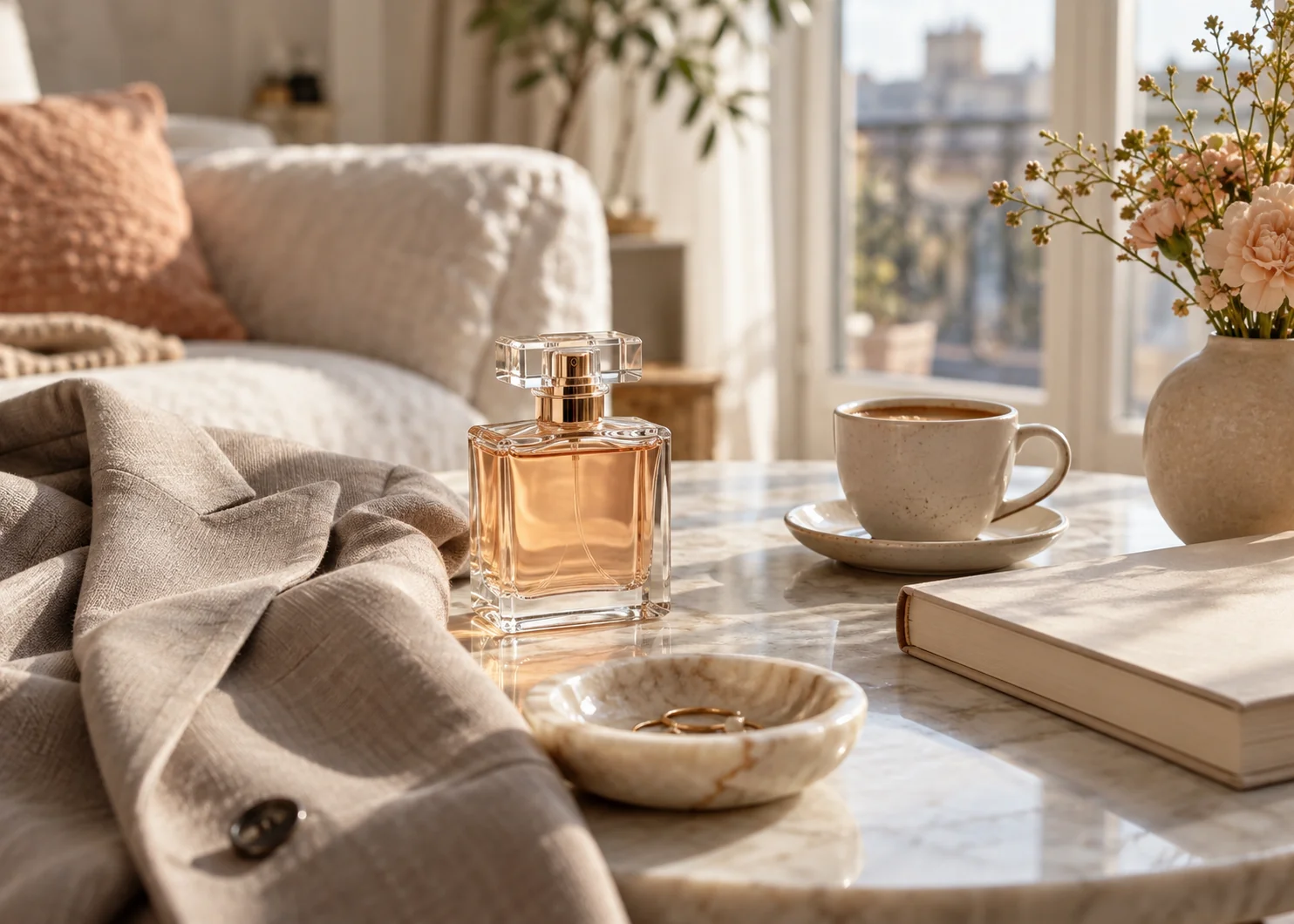
    An everyday fragrance beside clothing and personal items, suggesting a thoughtful morning routine.
    Editorial illustration generated with AI; generic bottles and objects, not actual FragranceLab products or measured results.

    7. Choose a bottle size that matches your uncertainty

    A large bottle can look economical when measured by price per milliliter, but only if you will actually use it. For an unfamiliar scent, the best value may be a smaller size or a legitimate sample opportunity that reduces the risk of regret.

    Ask how frequently you expect to wear it. If you use the same scent almost every day, a larger bottle might make sense. If you like variety, smaller formats may keep the collection manageable.

    Check the stated volume rather than relying on the bottle’s appearance in photographs. Compare total costs, not just apparent discounts. A well-chosen bottle that you finish offers more practical value than a bigger bottle that stays untouched.

    8. A simple method for choosing a fragrance gift

    Buying for someone else introduces uncertainty. The safest approach is not to guess their personality from age or gender; it is to look for actual clues.

    Start with fragrances they already use and enjoy. Look at broad scent directions, preferred intensity, and when they typically wear fragrance. If you cannot learn that much, avoid assuming that an expensive or famous bottle will automatically be welcome.

    Check the store’s gift options and return conditions. Fragrance preferences are highly personal, and returns may have restrictions after opening. A thoughtful note, accurate product information, and a reliable exchange policy can matter more than dramatic packaging.

    A gift should feel considered, not like a test of the recipient’s taste.

    9. Know what an “inspired” fragrance means when shopping

    Online fragrance stores may sell different kinds of products. Some are original designer perfumes. Others are independently made fragrances intended to evoke a familiar scent direction. Those categories should not be confused.

    FragranceLab describes its collection as independent inspired alternatives, not original designer-brand perfumes. If you are considering one, judge its own description, price, bottle information and your personal experience. Do not assume its formula, packaging, performance or manufacturer matches another brand’s product.

    Before ordering, check the product page, shipping policy, payment process, and available support. The confidence to buy should come from clear information rather than ambiguity about what arrives.

    10. How to choose the right perfume: five questions

    When you have narrowed a shortlist, ask yourself:

    1. Do I genuinely enjoy the scent after the opening settles?
    2. Can I picture wearing it in a normal week?
    3. Is the level of presence comfortable for the people and spaces around me?
    4. Am I confident about the product identity, size, price, and policies?
    5. Would I still want this bottle if it were not trending?

    You do not need perfect answers. The point is to replace impulse with a little reflection.

    If two options feel equally good, consider buying neither immediately. Revisit them after a day or two. Deliberate purchases often lead to more satisfying collections.

    Frequently asked questions

    Is a more expensive fragrance always better?

    No. Price can reflect branding, presentation, distribution, ingredients, and other factors. Enjoyment and fitness for your purpose are personal. Evaluate what you are buying and whether the value makes sense to you.

    Should I choose EDP instead of EDT?

    Not automatically. Eau de Parfum and Eau de Toilette labels often indicate differences in a brand’s formulation approach, but they do not guarantee a specific performance or preferred scent character. Compare the actual versions whenever possible.

    Can I buy a fragrance without trying it first?

    Yes, but uncertainty is higher. Read accurate descriptions, check size and return rules, and consider smaller purchases or samples where available.

    How many fragrances do I need?

    As many or as few as serve your life. One reliable favorite is enough for many people. A small, varied wardrobe can be enjoyable if you like choosing different scents for different moments.

    Make fragrance a personal choice

    The right fragrance is not necessarily the most expensive, the most complimented, or the longest-lasting. It is the one you enjoy wearing, understand well enough to buy confidently, and can fit into your own life.

    Start with a mood, explore a few scent directions, sample patiently, and consider the practical details. Fragrance becomes easier to enjoy when the decision feels like your own.

    Explore FragranceLab: Browse the FragranceLab collection for independent inspired fragrance styles, with product identity and ordering information explained on individual listings.

    Sources and editorial notes

    Reviewed on October 15, 2026. These are editorial guides, not personal wear tests, supplier certifications or product performance guarantees. Images are AI-generated conceptual illustrations, not photographs of products offered for sale.

  • How to Start a Perfume Resale Business

    How to Start a Perfume Resale Business

    Plan your first fragrance order

    Start with your customers, your available budget and a manageable selection of fragrances. Keep a record of each product reference, quantity and price so you can compare your plan with actual sales.

    Understand your costs

    Use the current euro prices on our product pages. Add the weight-based shipping charge shown at checkout. Our prices include tax, and we pay import duties and customs clearance fees.

    Your own selling costs may include packaging, payment processing, advertising and delivery to your customers. Keep these separate from the purchase price. Sales revenue is not the same as profit or cash available to spend.

    Build a clear order

    Select product references and quantities from our current collection. Each product counts as 0.8kg for shipping. Orders are divided into parcels of up to 31 items; handling fees apply per parcel. There is no free-shipping threshold.

    Ask for help

    Send product references, quantities and your destination country to [email protected] or WhatsApp +852 5230 7751. Customer service can help clarify the order before you pay.

    Orders are dispatched within 24 hours of successful payment. Estimated delivery is 10–15 calendar days after dispatch. Shipping is calculated by weight at checkout, with no markup or free-shipping threshold. Prices include tax; we cover import duties and customs clearance fees.

    We will use the details you provide to respond to this inquiry through your selected contact method. Please review our Privacy Policy. We store your request and its advertising reference to manage your inquiry. This does not subscribe you to marketing.

    Preparing the secure form…

  • FragranceLab: A Journey Shaped by Scent

    FragranceLab: A Journey Shaped by Scent

    Fragrance for everyday life

    FragranceLab brings together fragrances for the moments that make up your day. Explore a familiar favourite, discover a different mood, or choose a gift with someone special in mind.

    Our European collection follows the FragranceLab-EU catalogue. Prices are shown in euros including tax, with delivery charges calculated by weight.

    Orders are dispatched within 24 hours of successful payment. Estimated delivery is 10–15 calendar days after dispatch. Shipping is calculated by weight at checkout, with no markup or free-shipping threshold. Prices include tax; we cover import duties and customs clearance fees.

    For product or order questions, contact [email protected].

  • Beyond the Star Rating: What Makes a Helpful Fragrance Review?

    Beyond the Star Rating: What Makes a Helpful Fragrance Review?

    A helpful fragrance review describes one person’s experience. It does not promise that everyone will feel the same. A favorite scent for one person may be a different fit for another. Reading feedback with this in mind makes reviews more useful.

    Look for details, not only stars

    Useful reviews explain the fragrance’s character, how the reviewer wore it and what they enjoyed. Words such as bright, powdery, warm or woody can offer clues. A description of the setting—an office, an evening out or everyday wear—adds context.

    Comments about strength and wear time are individual observations, not guarantees. Application, surroundings and personal perception can change the experience. Compare several detailed reviews instead of relying on one sweeping statement.

    Separate the scent from the shopping experience

    A perfume’s aroma and a store’s service are different parts of a purchase. When reading feedback, distinguish opinions about the fragrance from comments on packaging, delivery, communication and order accuracy.

    Write a helpful fragrance review

    After trying your fragrance, describe your first impression. Then explain whether it changed and which occasions you would choose it for. Mention relevant product details so readers understand what you tried. Be candid about both positives and limitations.

    If an order arrives damaged or incorrect, contact support with your order number and photographs so the issue can be addressed directly.

    Your experience matters

    FragranceLab welcomes honest feedback about products and service. You can contact our team at [email protected] or through WhatsApp. Specific feedback helps us understand what worked and what needs attention.

    This article is a guide to customer feedback. It does not present quoted customer testimonials or verified buyer ratings.

    Contact FragranceLab · Explore the collection ↗

  • The World of Fragrance: A Simple Guide to Finding Your Scent

    The World of Fragrance: A Simple Guide to Finding Your Scent

    This fragrance families guide introduces a simple language for exploring perfume. Fragrance brings together creativity, personal taste and the pleasure of discovery. A bottle may become an everyday favorite, a thoughtful gift or a reminder of a particular moment. Understanding the language around perfume makes exploring it easier.

    Fragrance families guide: start with scent character

    Descriptions such as fresh, floral, woody and amber offer a useful starting point. Fresh fragrances may suggest citrus or an airy impression. Floral scents draw attention to flower-like notes. Woody fragrances can feel dry and textured. These labels are guides, and many perfumes combine several characters.

    Rather than searching for a perfect category, notice what attracts you. Do you enjoy something bright and easygoing, soft and comforting, or deeper and more distinctive? Your preferences can change with the occasion.

    Give a fragrance time

    A first impression does not tell the whole story. Perfumes can feel different as they settle. Where possible, test a fragrance, revisit it later and consider how it fits your routine. A paper strip helps compare options, while wearing a scent lets you judge your own experience.

    A marketplace with many ways to explore

    Perfume shopping spans brand boutiques, specialist stores and online collections. Online browsing makes it easy to compare product details and discover unfamiliar options. Check the fragrance name, size, product description and purchase policies before ordering.

    Make the choice personal

    Popularity can inspire a shortlist, but your enjoyment matters most. Choose for the person who will wear it and the setting in which it will be used. If you are buying a gift, consider the recipient’s existing favorites.

    At FragranceLab, browse our women’s perfumes, men’s perfumes and gift sets, or explore by brand. Questions about a product or order? Our team is available to help.

    Contact FragranceLab · Explore the collection ↗