Read perfume mixtures through the whole impression, the question being asked and the limits of current research. Keep note lists, formulas and buying choices separate.
Perfume mixtures invite two different questions: what does the whole scent remind you of, and which parts can you name? You may enjoy a rounded floral impression without identifying a single flower. Alternatively, you may notice a familiar woody detail while struggling to describe the whole. Neither answer, by itself, reveals the formula.
That distinction matters when you shop. A long list of notes can look like a promise of many separate experiences. Yet the listing cannot tell you how clearly each impression will stand out. Start with the finished scent you want to understand, rather than treating the description as a checklist you must complete.
Read perfume mixtures before counting the notes
First, keep the seller’s scent description separate from an ingredient declaration. A note such as rose describes a smell impression. It does not identify every substance that creates it. Likewise, several named notes do not establish the number of chemical ingredients in a bottle.
The FDA’s fragrance guidance explains that fragrance ingredients in US retail cosmetics can be declared collectively as fragrance. Therefore, a label and a note list serve different purposes. Neither should be treated as a complete recipe when the manufacturer has not disclosed one.
Consider an invented listing with citrus, rose and soft woods. You might describe the overall impression as a bright floral. That observation does not prove that the rose has disappeared or that a promised ingredient is missing. It records how you describe the complete scent, using the information available to you.
Instead of counting successful guesses, write one useful sentence about the whole. Then add a detail you can describe with confidence. Leave the remaining notes as references to explore, rather than failures to explain. A short, honest observation is more useful than a technically impressive list borrowed from the seller.
Separate a whole impression from a difference test
Next, notice what the question asks you to do. Describing one scent and choosing the odd sample from a group are different tasks. Naming a familiar impression is another task again. Success at one does not automatically demonstrate skill at all three.
A 2026 study by Chang and colleagues in eLife makes task design important. Across three experiments, the researchers studied human adults using controlled discrimination training. Their report includes 96 adults and 1,295 sessions overall. Participants compared specified odor mixtures, molecular forms or concentrations under laboratory conditions.
Training with mixtures in different proportions produced gains that transferred to untrained mixtures and the other nostril. However, the comparison tasks did not show the same pattern of transfer. This supports a specific finding about learning under the study’s conditions. It does not establish that buying more perfumes makes someone a better judge.
Also, a discrimination result is not a liking score. Detecting a difference does not say which sample someone would choose for an ordinary day. Keep those decisions separate when reading research or comparing products. This article offers no smell-treatment routine or promise of cognitive benefit.
What a newer prediction study actually measures
A separate July 8, 2026 preprint by Pellegrino and colleagues asks how well component descriptions can predict mixture descriptions. It is a preprint, not a peer-reviewed conclusion. The researchers evaluated 432 mixtures using component odorants and a trained human panel.
Panelists used a defined vocabulary of 51 descriptors. Within that setup, averaging component profiles predicted mixture ratings well. The result challenges the idea that every mixture needs a wholly unpredictable explanation. However, it does not turn a retailer’s three-word note list into a mathematical recipe.
The study used moderate intensities and mixtures with no more than ten components. The authors also identify limits involving the vocabulary, measurement noise and concentration. Therefore, the findings cannot guarantee how a complex commercial perfume will smell on a particular person. Nor do they establish that two products with similar descriptions have identical formulas.
The two papers answer different questions. One examines learning to distinguish controlled stimuli; the other models descriptive ratings. Read the task and outcome before comparing their conclusions. Neither paper is an assessment of FragranceLab products, and this guide does not borrow laboratory results as product-performance evidence.
Keep perfume mixtures research out of the guessing game
For a practical reading check, ask four questions. Which materials did the researchers actually use? What did participants do? How did the researchers measure the outcome? Finally, which conditions limit the conclusion?
For example, a trained panel using a shared vocabulary is not the same as friends describing a perfume informally. A rating of similarity is not proof of equal composition. Likewise, identifying a different sample does not establish longer wear, stronger projection or greater value.
These distinctions leave room for useful future work. Researchers can test broader mixtures, wider concentrations and different groups. They can also compare vocabulary-based ratings with other tasks. However, those possible directions are questions for further evidence, rather than features already available in a shopping tool.
You do not need to reproduce a laboratory protocol to choose a fragrance. Instead, use research to set reasonable limits on a claim. If someone says a formula is proven identical because the notes match, ask where the formula evidence is. A persuasive scent comparison cannot supply information that was never measured.
Compare perfume mixtures with useful notes
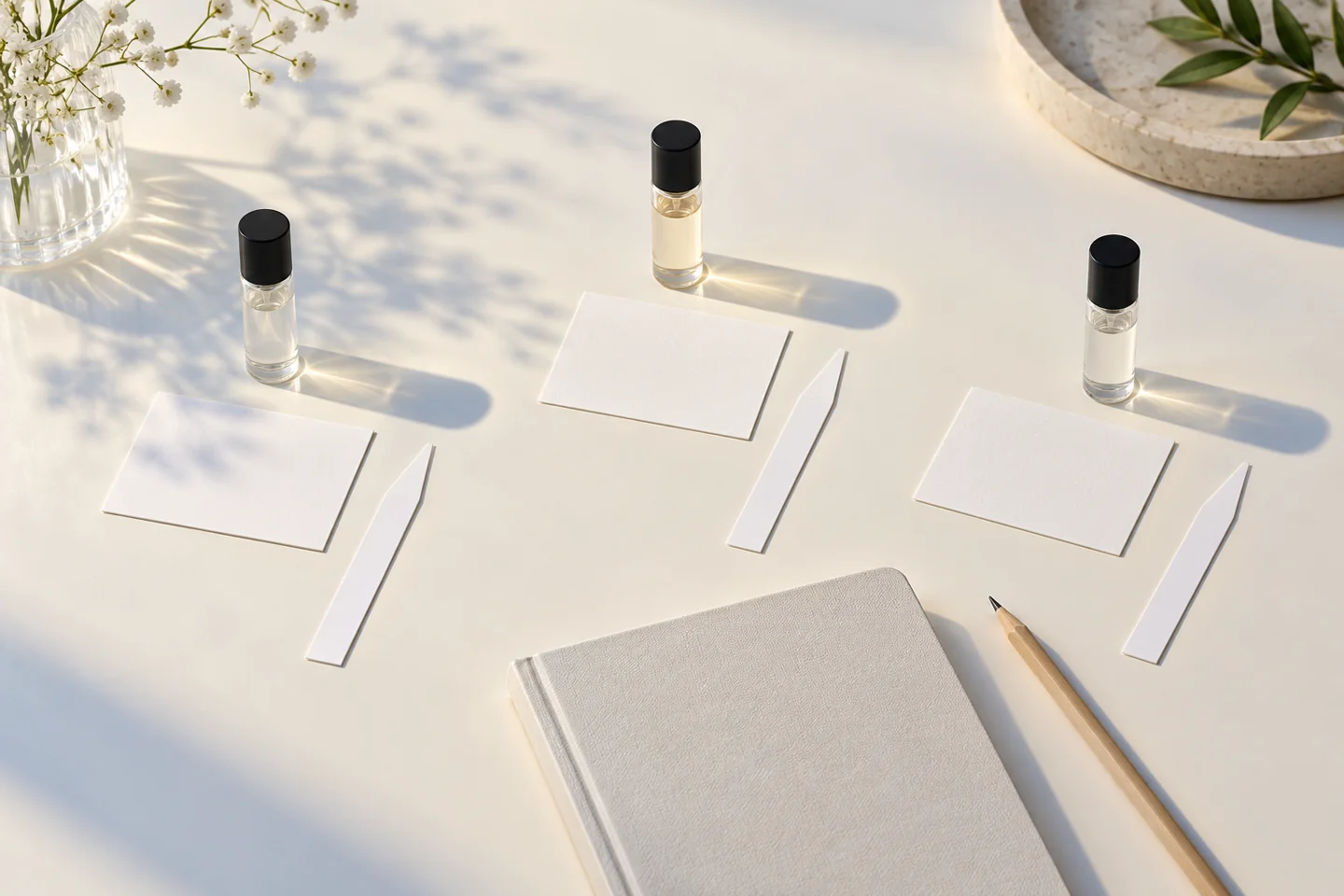
Begin with the exact product identity. Record its name, format and source of information. Then distinguish the seller’s description from your own observation. You can do this in a plain notebook without assigning a score or pretending to conduct a controlled test.
Here is an invented record for a fragrance you are considering:
| Field | Example entry |
|---|---|
| Seller’s description | Citrus, rose and soft woods |
| Whole impression | A bright floral direction |
| Detail I can describe | A dry woody aspect |
| Still uncertain | Whether this suits the occasion I have in mind |
| Formula information | Not disclosed; notes are not a recipe |
Also, record relevant context in a few words. Perhaps you tried the item after another scented product, or only encountered it briefly. Keep that uncertainty visible. Do not turn a passing impression into an exact statement about ingredients, duration or another person’s experience.
Follow the product’s directions and use an appropriate opportunity to assess it. There is no need to buy raw materials, alter a finished perfume or combine bottles to investigate this article. If the choice remains unclear, postpone it. More complicated scent language does not make a purchase more urgent.
Finally, return to the decision you actually need to make. Does the complete fragrance interest you? Is the product identity clear? Do its size, price and terms fit your plans? You can answer those questions without proving that every advertised note is separately detectable.
Bring the question back to the actual product
Our FragranceLab inspired-fragrance collection is a place to explore finished products with their own descriptions. These are independent inspired alternatives, not original designer-brand perfumes. A designer reference does not establish identical ingredients, performance or affiliation. Judge the actual listed item and ask about any unresolved detail.
Orders are dispatched within 24 hours of successful payment. Estimated delivery is 10–15 calendar days after dispatch. Shipping is calculated by weight at checkout, with no markup or free-shipping threshold. Prices include tax; we cover import duties and customs clearance fees.
A useful conclusion can be simple: you like the overall scent and understand what you are buying. Naming every part is optional. Keeping preference, research and formula evidence distinct makes perfume mixtures easier to discuss without asking them to prove more than they can.
Sources and editorial notes
- Chang and colleagues, eLife, DOI 10.7554/eLife.102999. Accepted manuscript February 2, 2026; version of record February 13, 2026. Controlled human odor-discrimination research, not a commercial perfume trial.
- Pellegrino and colleagues, DOI 10.64898/2026.07.03.736426. July 8, 2026 preprint, version 1. Not peer reviewed; stated material, concentration and measurement limits apply.
- FDA: Fragrances in Cosmetics. Standing US consumer guidance; collective fragrance declaration, not a formula disclosure.
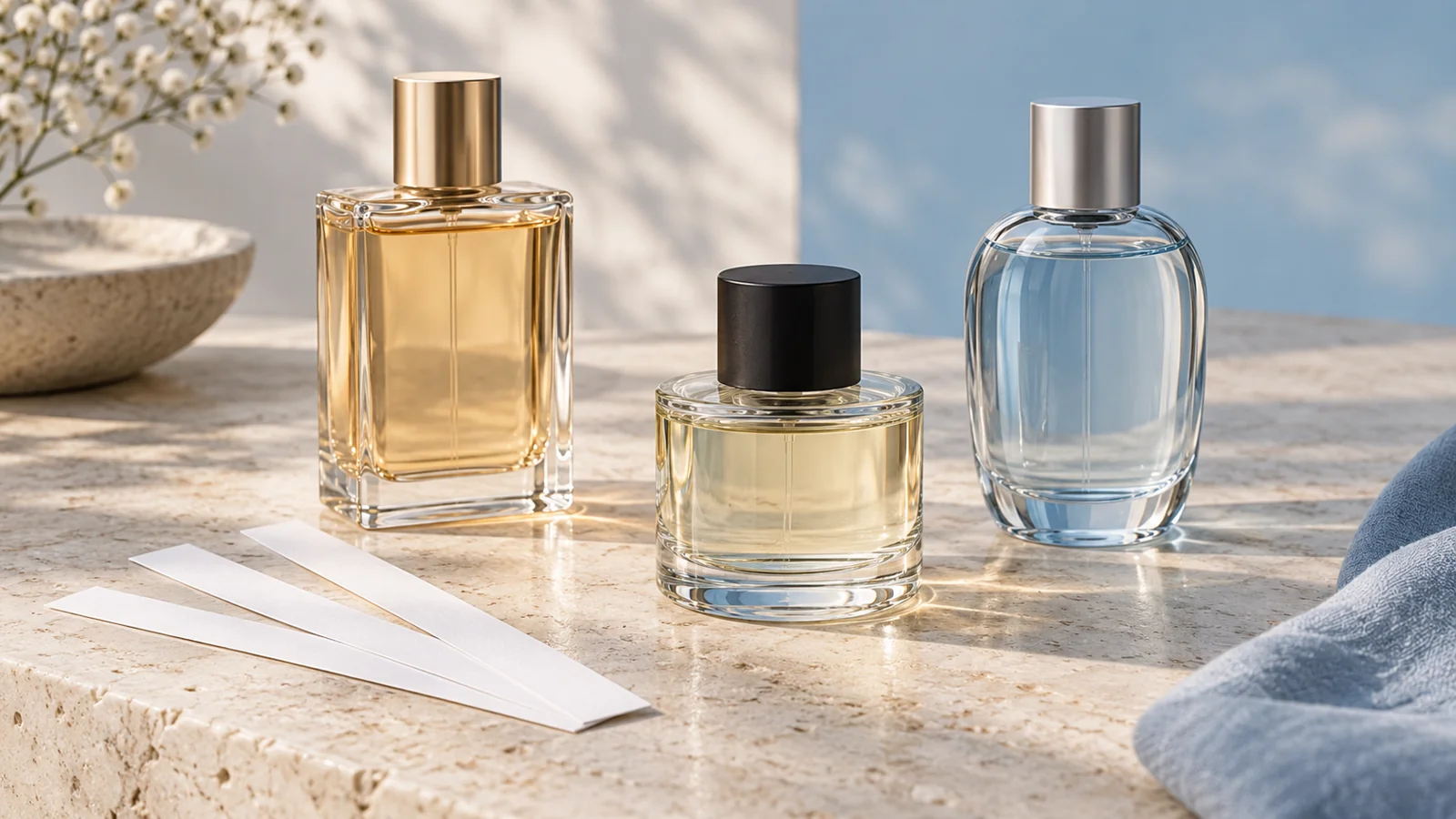
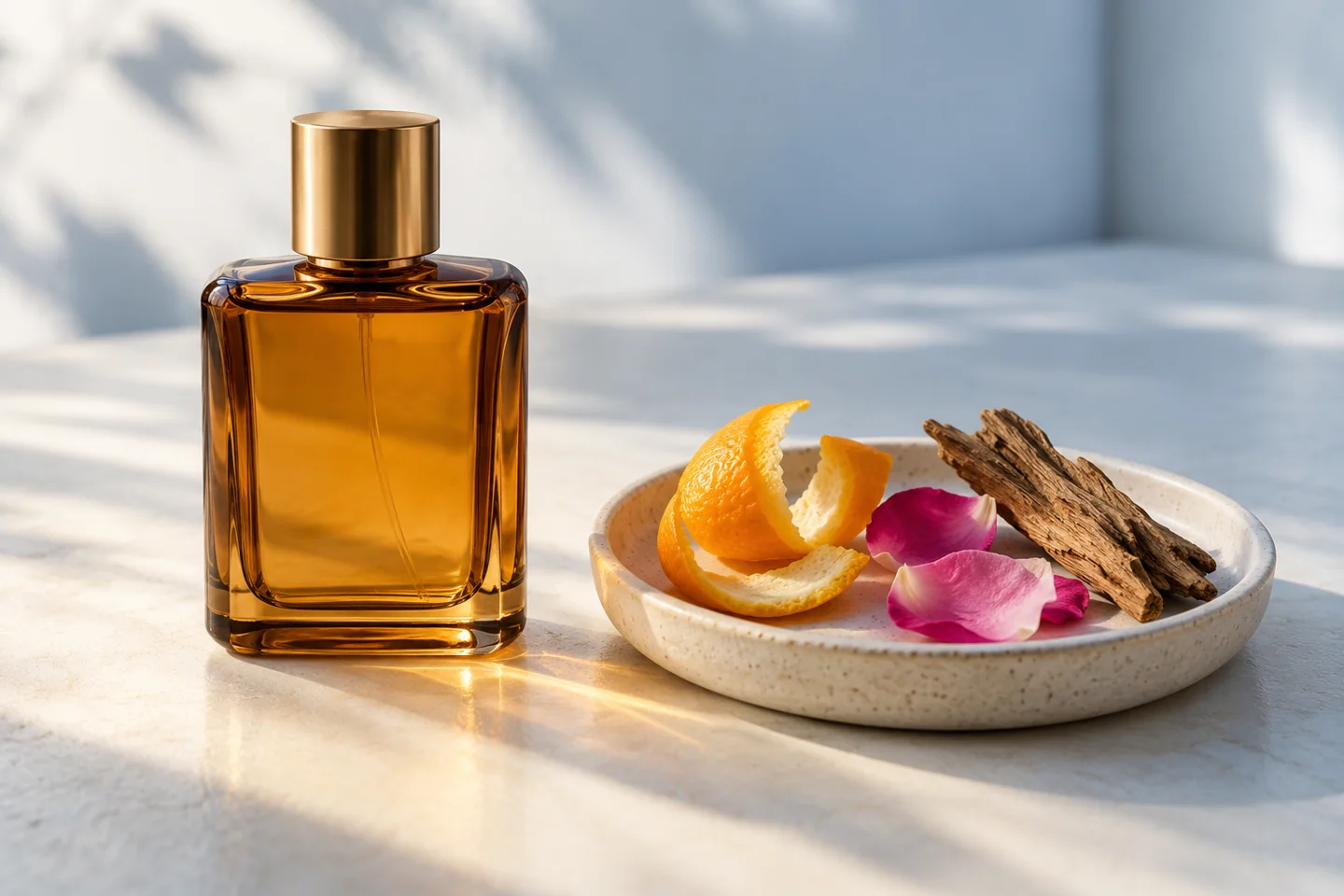
Sources and current store wording checked October 29, 2026. Published by FragranceLab Editorial Team. Codex performed the editorial checks; this does not imply independent specialist testing. All three illustrations were generated with AI and show generic objects. They are not actual products, ingredient photographs or research evidence. No Fragrantica images or community ratings were used.